

































































Dainese Gullfoss suit review
Published on: 27 April 2026
CLICK DAINESE GULLFOSS SUIT TO SHOP WITH FREE UK NEXT DAY DELIVERY
The first question, I suppose, is what is an adventure suit, and why do we think this is a proper one? And the answer is not totally straightforward, because different manufacturers have their own take on the subject.
Klim, after all, owns the 'adventure' market. It's the highest profile name in the adventure world, and certainly if a retailer wants to be seen as a serious purveyor of adventure gear they won't be taken seriously if Klim is not in their portfolio of brands.
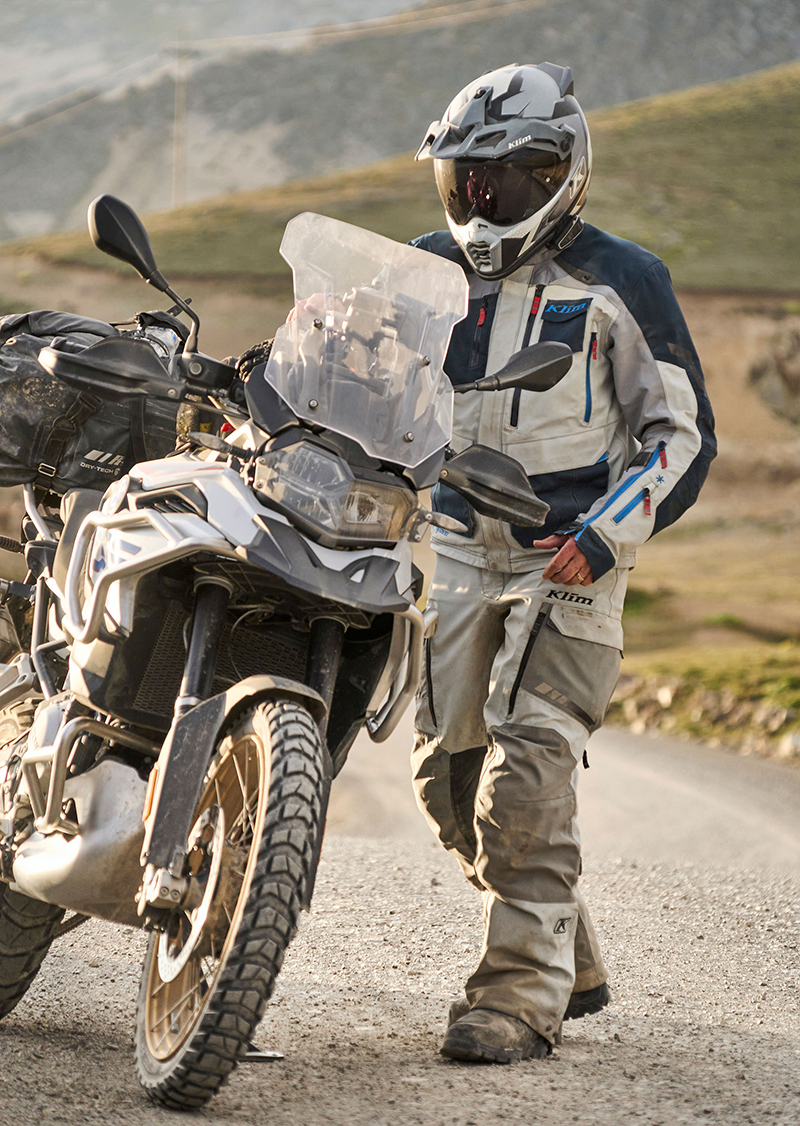
Yet, from our perspective, we don't see some of Klim's more famous outfits as what we would term adventure suits at all. And that's because if you are travelling to anywhere exotically hot, or if you are working up a bit of a sweat off road, then the last thing you want to be wearing is a laminated suit, or indeed any kind of waterproof outfit. Yet Klim's so-called adventure suits, like the Badlands and the Carlsbad, come with laminated membranes. Get hot in one of these suits, and you'll sweat your nuts off. But in America it may well be that they have a different interpretation of what they understand adventure riding to be. And certainly to us that would seem to be the case.
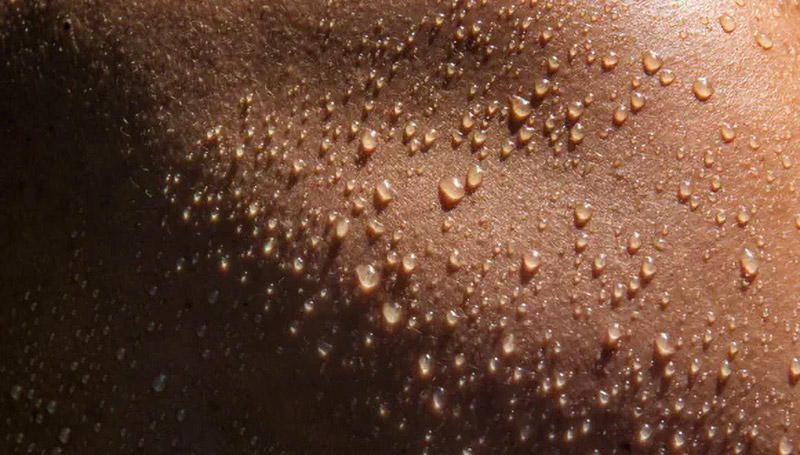
In our world, an adventure suit should come with a removable membrane. And that's because if you are somewhere hot, or if you are generating your own heat, you need to be able to remove the waterproof layer, not only to allow you to sweat more effectively, which of course is the body’s way of cooling itself down, but also to allow the cooler, oncoming air to better reach your body.
Lots of brands do such suits, although historically they were always more popular with the southern European brands like Dainese, Alpinestars and Spidi because, of course, down in that part of the world it does get pretty warm.
Well the Gullfoss is a new-for-2026 offering from Dainese, and although people like Rukka and Held bring a degree of finesse to the category that the Gullfoss cannot match, it is nonetheless true that neither of those brands can touch the Dainese suit on price; that price being £360 for the jacket and just under £300 for the pant, which is half the price of the top offerings from the two other brands I've mentioned.
Anyway, let's get into the Gullfoss in a bit more detail. As ever, we'll focus on the jacket, because jackets are always the more interesting half. We'll then touch on the pants, although clearly all the important elements to do with construction and materials are going to be very similar.
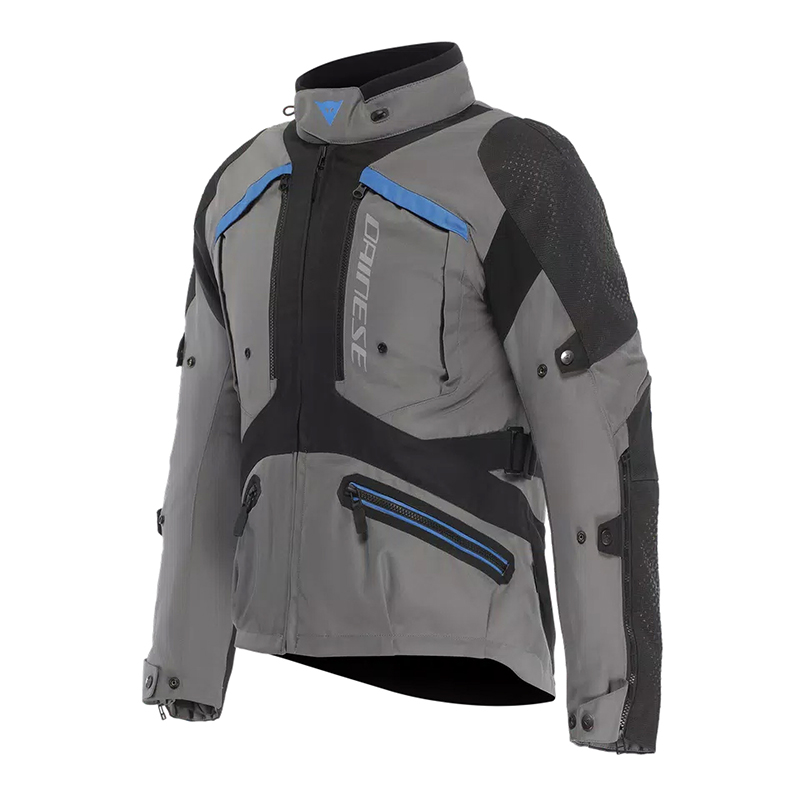
We'd like to think that we are the last people to be overly influenced by aesthetics. We simply hate it, for example, when somebody comes into the shop when their only criterion for a new helmet is that it match the colour of their bike. It kind of upsets us that anybody should approach such an important purchase on the basis of such a superficial consideration!
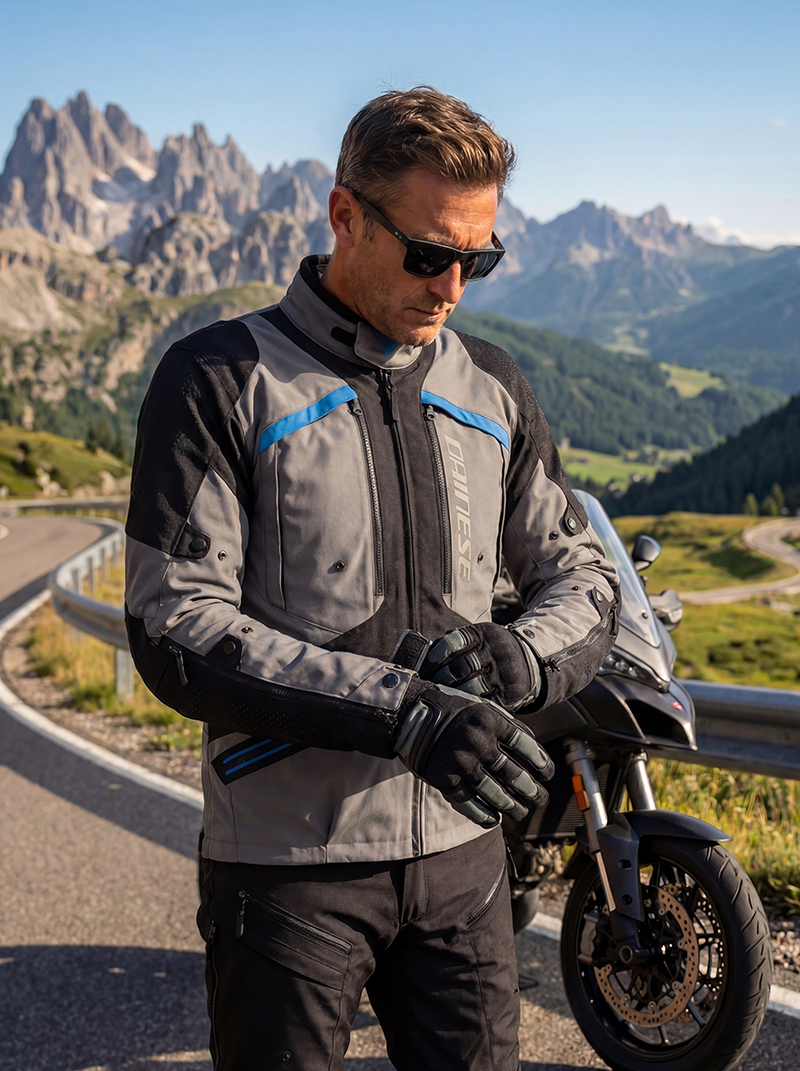
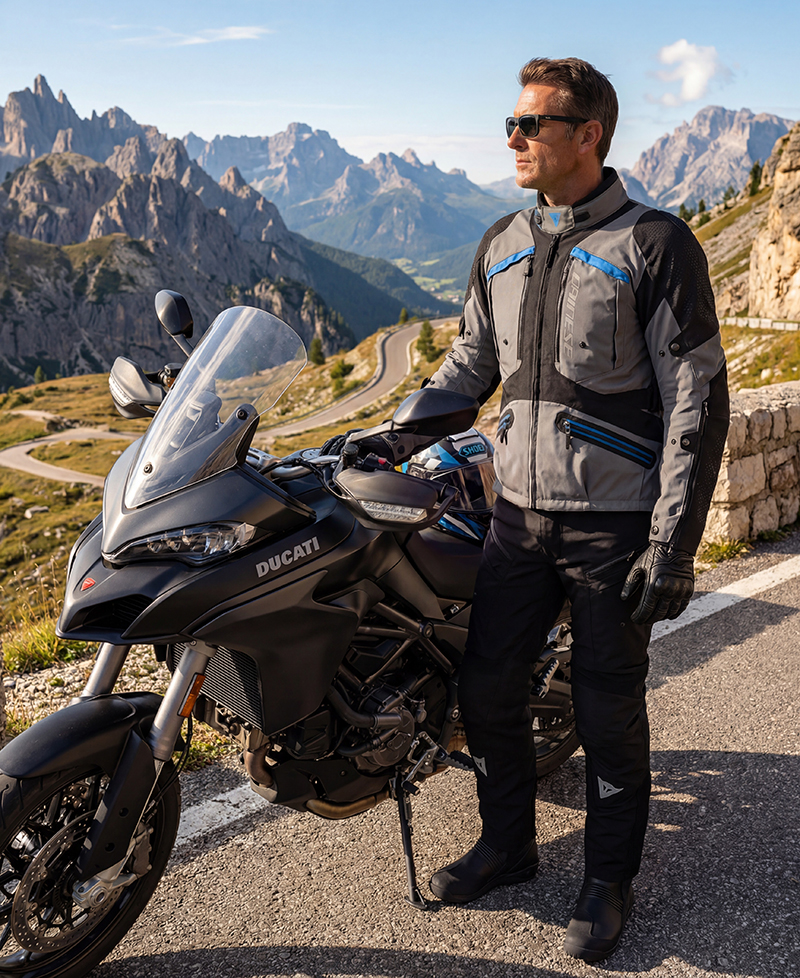
Yet we are all human. We can all appreciate beauty and beautiful things; and what cannot be denied is that Dainese knows how to make gear look good. And so even though we are a little embarrassed to admit it, the starting point for us is that the Gullfoss, particularly in this grey colourway, looks the business. It just looks right. It says 'adventure', without being in your face. The design makes for a smart and stylish look that is going to work on just about any bike, unless you're one of those sad, aforementioned individuals who has to match his clothing to the RAL colours of his bike's paintwork.
But enough of that. Let's now talk about the Gullfoss from more of a mechanical and functional perspective.
The outer fabric is a Cordura-style material of some description. Dainese doesn't tell us exactly what it is, but the fabric has a softish handle that makes for a jacket that's comfortable to wear and that moulds to the wearer.
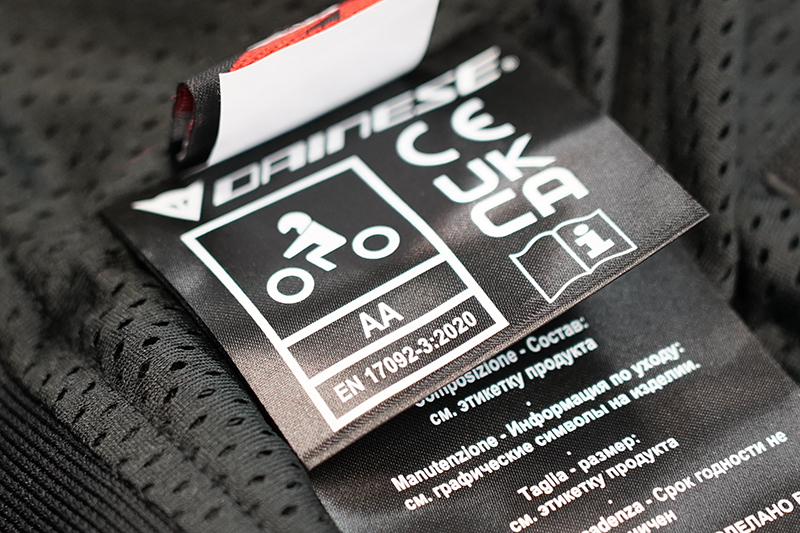
But comfortable and cosseting as the jacket's outer fabric feels, the Gullfoss still rates AA under EN17092 for abrasion and tear resistance; and on a suit like this that's all that one might hope for.
On the subject of protection, it's good to know that the armour in the elbows and shoulders is Level 2 rated. There's a pocket for a back protector and, right now, we would probably go with Rheon's Level 2 one. Now the armour in the Gullfoss is perfectly acceptable, although it perhaps needs to be acknowledged that Dainese is not in the forefront in this respect in perhaps the way it used to be. In truth, the Dainese armour, whilst reassuring, feels a bit clumpy in comparison with the best the market now has to offer. The jacket also comes with pockets for a two-part, chest protector.
You get two, lower, zipped, hand pockets that are no more than water resistant. There's a large pocket on the back that will carry maps, or perhaps more importantly the waterproof, over/under jacket.
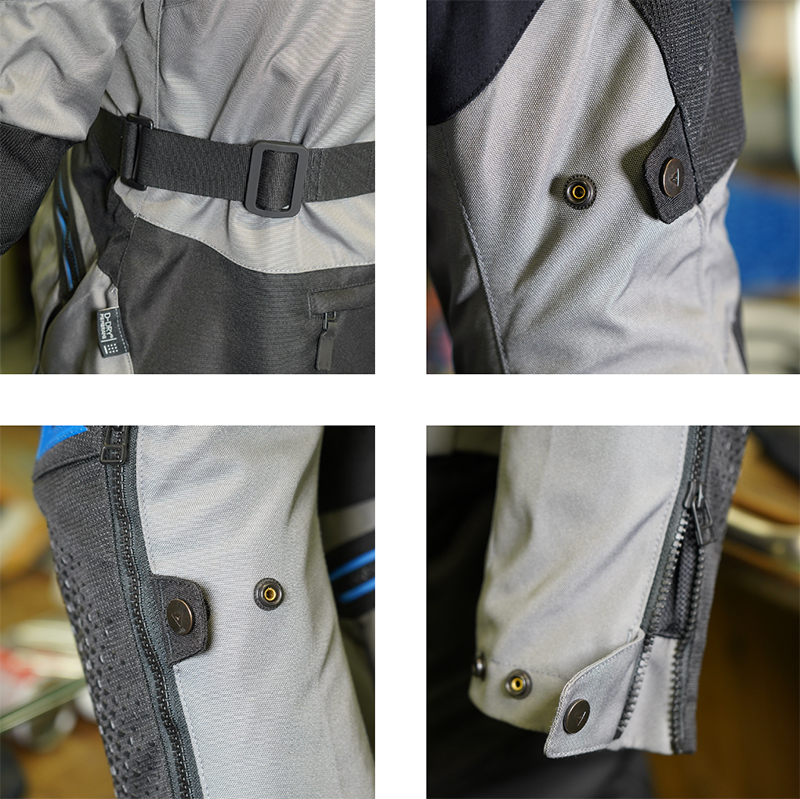
You don't go short either when it comes to adjustability. There's an adjustable belt at the waist, which is something we always like to see on a slightly longer jacket. There's a drawstring to pull in the hem of the jacket; and again that works well. You get poppers to adjust the sleeve volume on the biceps and forearms. And that's important on a jacket like this where sometimes you will be wearing multiple layers, and sometimes none. At the sleeve ends you get zips and poppers. Most gloves will fit inside the sleeves if that's what you want to do. But the sleeve aperture might struggle with a full-on, winter glove.
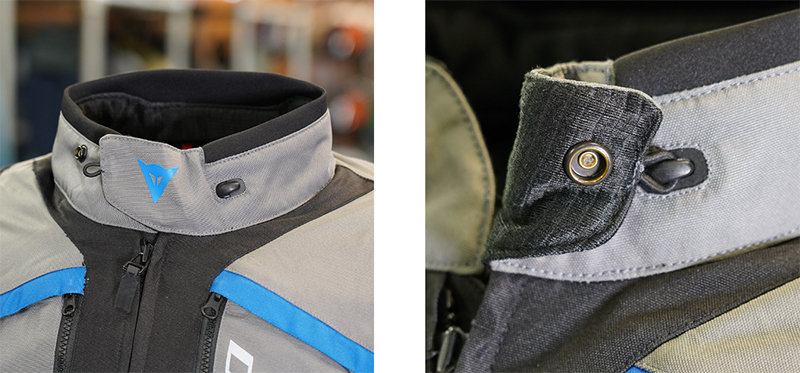
The neck is lined with neoprene, both for added comfort and to prevent rain ingress as it runs down the outside of the helmet, and tries to find its way inside the jacket. You also get a useful, elasticated strap arrangement to hold the neck open to get air in on a hot day. And talking of air, it's ventilation that the Gullfoss is all about.
Obviously the first thing is that when you remove the inner, waterproof jacket, air can pass easily through the outer shell because there's nothing in its way. But on really hot days, or when you are working hard, you might need more. Well the good news is that, on the Gullfoss, you do get more.
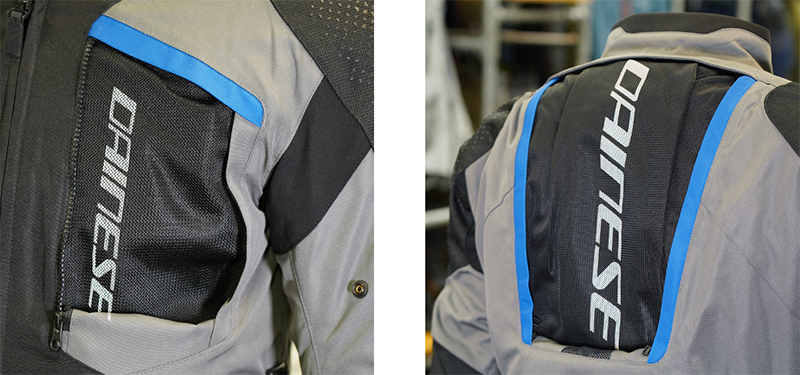
You get two, pretty huge, zip-down vents on the chest. Clearly these will allow lots of air in to promote sweating and to cool the skin down. You get an even huger, zipped vent across the back to allow warm air that builds up in the jacket to escape.
You then get long zips up the forearms that, when zipped down from the top, also allow cool air to run up the sleeves. No two ways about it, with everything open this jacket will do its best to help you stay cool. But the Gullfoss is much more than just a high-airflow piece. It represents a one-stop, layering system.
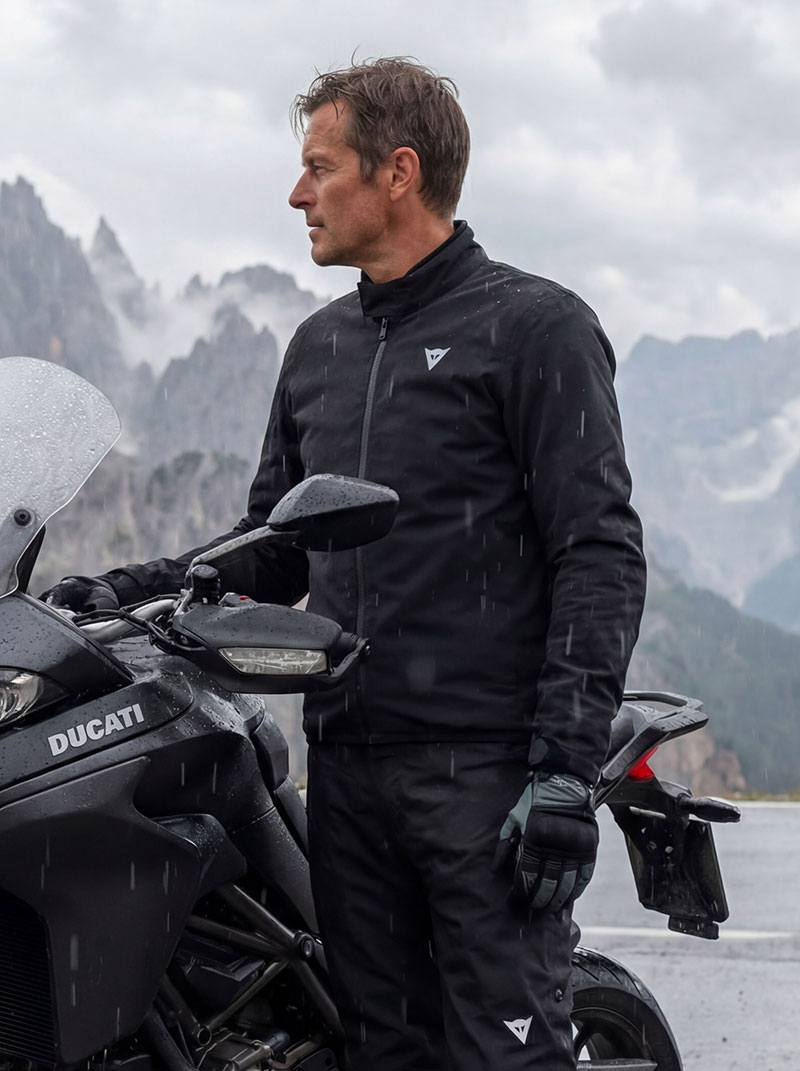
The first thing is to note that the removable, inner, waterproof jacket can be worn on the inside or the outside.
Worn on the inside, the waterproof jacket will do two things. It will help you stay warm, because it will serve to insulate body heat and protect you from the impact of the oncoming cooler air. The jacket will also serve to keep you dry up to a certain point. The rain is unlikely to ever pass through the inner, waterproof jacket, but after two or three hours in heavy rain the outer fabric could become sodden with rain. This can make you feel cold. You might, because of this, even think that you're getting wet, but that would not usually be the case.
The mark of a superior, 3-in-1 jacket like this, however, is a waterproof layer that can also be worn on the outside of the main jacket. Now to make this workable the waterproof element has to contain stretch, and the good news is that the Gullfoss's waterproof does. And when you wear it on the outside you will enjoy very high levels of waterproofing; indeed a level that might even be likened to that of a laminated, waterproof jacket.
Let's say you're in for a long ride in heavy rain. You put the waterproof over the jacket. You ride for three hours. When you get to your destination; you take your waterproof off, and the Gullfoss jacket beneath it will be pretty much perfectly dry. And that's the gold standard.
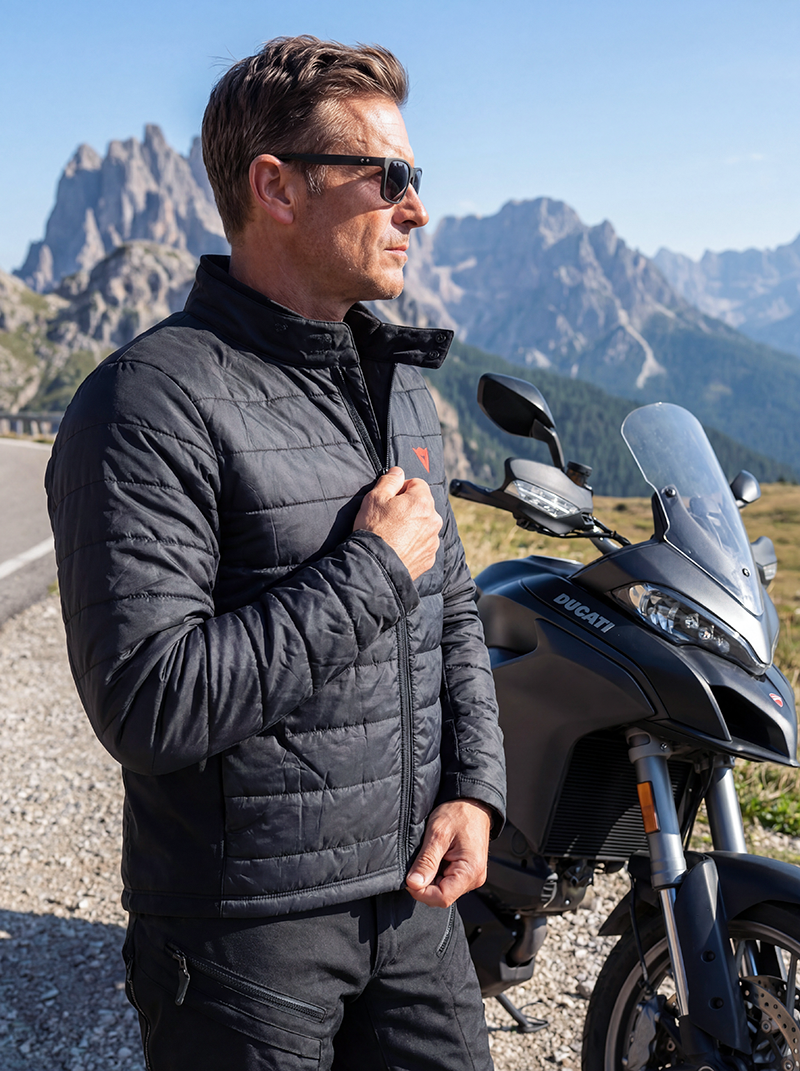
The jacket also comes with an inner, thermal liner that can be worn at the same time as the waterproof, or separately. On a really cold day you might wear both; ditto if it was raining on a cold day. But if it's simply a bit on the chilly side you could just wear the thermal jacket without the waterproof. Alternatively, you could wear the waterproof without the thermal to the same end.
In truth, the thermal jacket is nothing much to write home about. It is filled with some form of hollow-form fibre, and will pass muster as a destination jacket. It will do a job, but this is no Klim Maverick. It's not even a Rukka Lahti. Put it like this; if staying warm were a priority you could do better.
Anyway, that's all the important stuff. But you do get some reflective areas for better nighttime visibility. You also get a zip to connect the jacket to the Gullfoss pants.
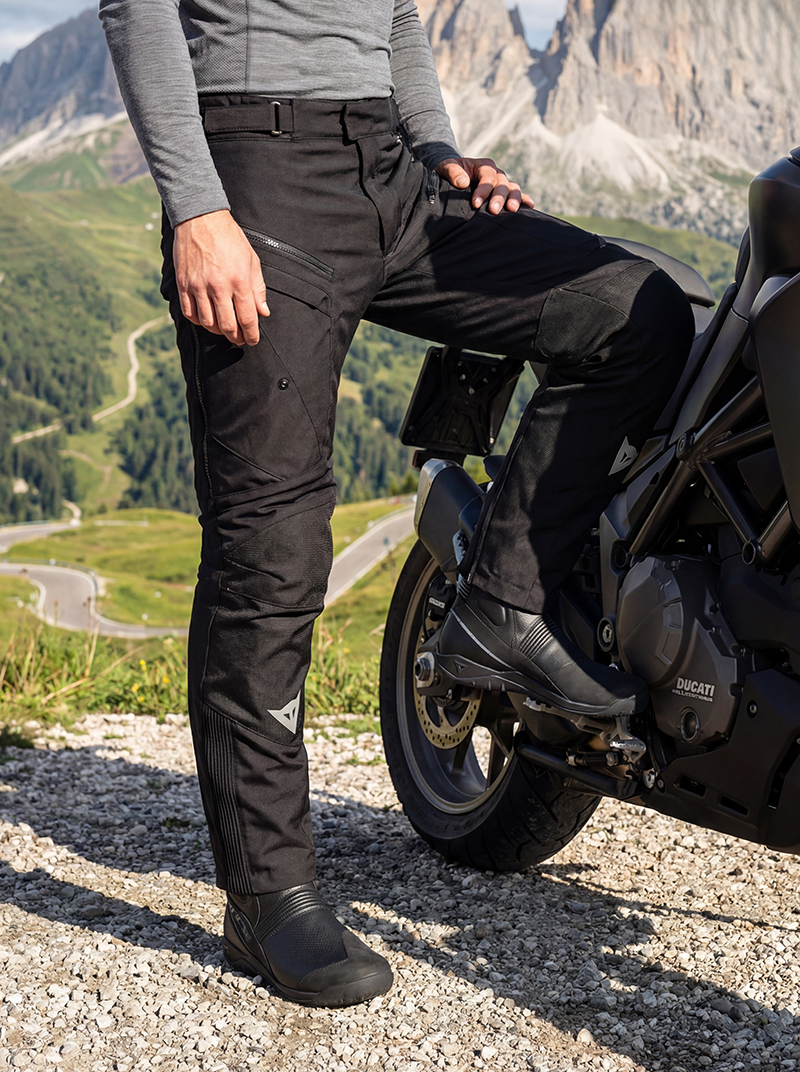
As we have suggested, the pants mirror the jacket in most respects.
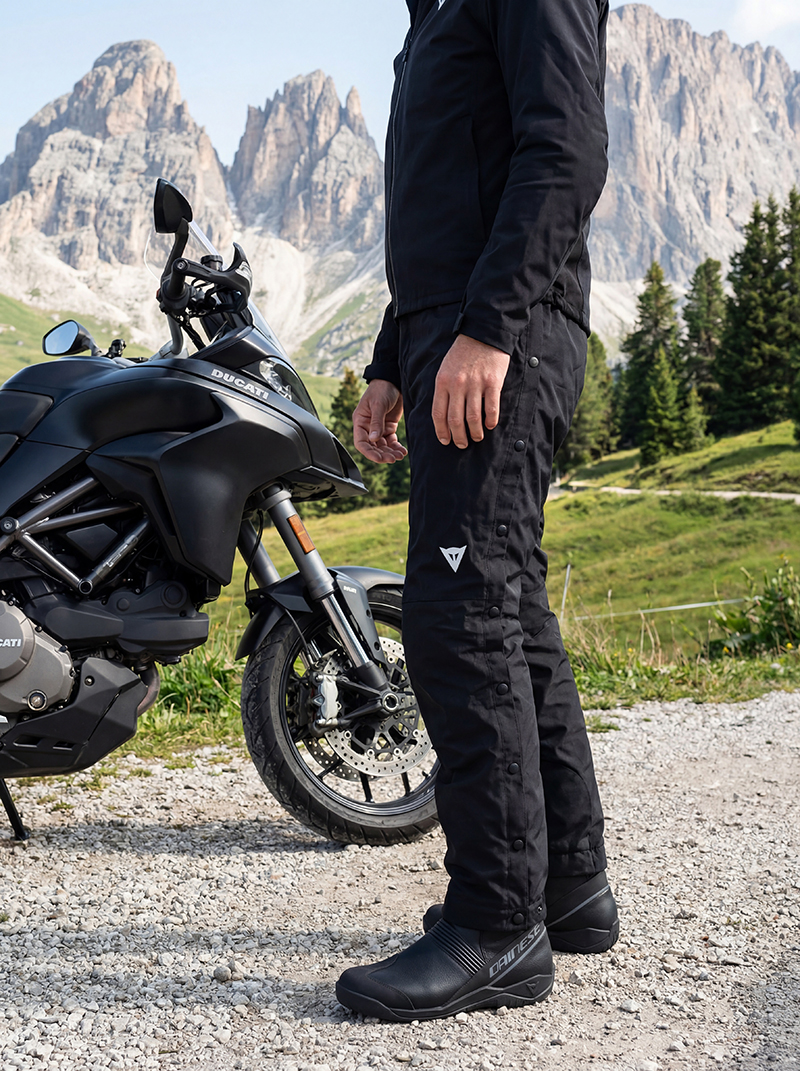
So you get the same outer fabric, the same AA rating, the same Level 2 armour, a removable, waterproof, inner trouser that can be worn inside or outside the protective layer, a thermal, inner pant, lots of venting, a couple of pockets, stretch at the bottom of the legs and long zips that allow the pants to be worn over most adventure boots.
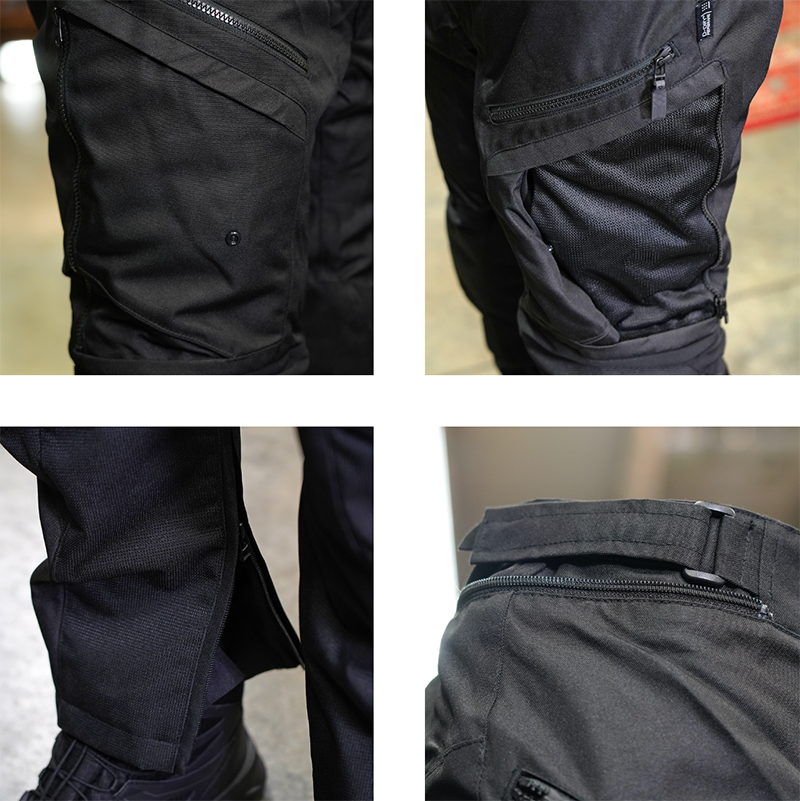
In most respects the trousers are unremarkable. They are what you would expect.
The only point we would make about these pants is that they come in one leg length only; and in our book that's not enough.
In mitigation of this, we might suggest that on a pant to be worn with tall adventure boots, having a shorter trouser is not always a problem. But the one leg length still does not rule out the possibility of course that, if you are particular short in the leg department, these pants might still be too long.
There's one other thing that's worth saying about these pants. And it's not a Dainese issue, but rather something that applies to all pants where the waterproof component can be removed.
And it's that very rarely will you wear the waterproof layer on the outside of the trouser. You can do, obviously; but it's not something you'd do at the side of the road.
The reality is that the top half of a suit is far more likely to 'wet out', and of course it's more important that you keep your top half dry and warm. Which is why wearing the waterproof component over the jacket is something you might occasionally do.
In some ways, the pants come along for the ride. Clearly when it's going to be really warm you'll remove the waterproof trousers, but for the rest of the time you'll probably just leave them inside the protective pant.
There's no jacket or pant construction that works for everybody. But some constructions work better than others in certain situations.
Outfits like the Gullfoss represent a trade off; a compromise. They are very versatile, such that there are few situations where a suit like this would be inappropriate.
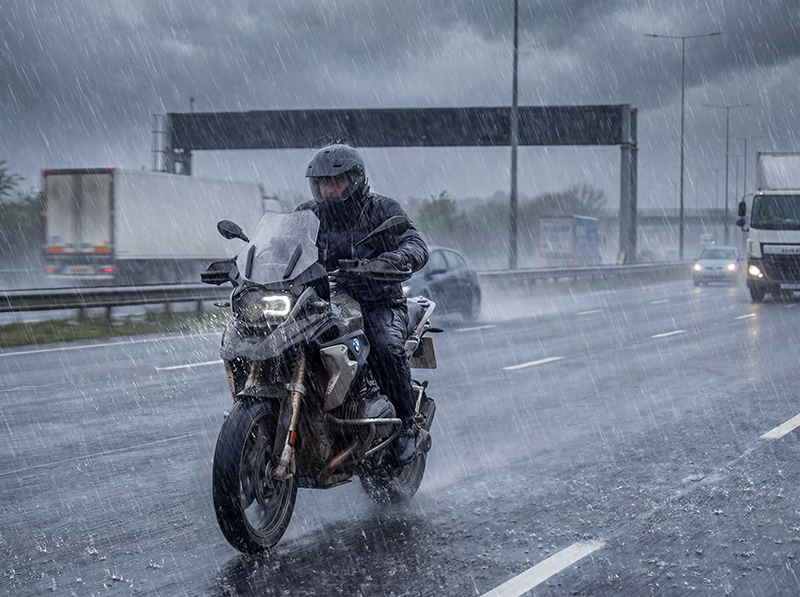
But if you commute through the winter or ride professionally, such that you often find yourself riding in heavy rain for many hours at a time, something like the Gullfoss would perhaps not be your best choice. And that's because the jacket could wet out. You can always remove the waterproof component, and put it on over the protective jacket; but that can be a hassle, and nobody wants to be constantly taking the waterproof out and putting it back in again.
The rationale for the Gullfoss is its ability to flow air and to allow your skin to breathe in order to stay cool in warm weather. And as such it's potentially perfect for the adventure rider who wants to travel to warmer climes and who, when there, might even want to take to the rough stuff.
With the membrane worn on the inside along with its mid-layer, you will have a jacket that will work in cold weather and, up to a degree, in the wet.
Put the waterproof on the outside of the jacket, and you will enjoy a quality of waterproofing equal to, or better than, a laminate jacket.
And what this means is that the Gullfoss is a bit of a Jack of all trades, although potentially a master of none. If you went on a big tour of Europe, the Gullfoss would work very well. Nothing inside it when the temperatures are above 25. One or both layers beneath the jacket when it's much below that. And the waterproof over the top of the jacket when the heavens really open.
This is why, for us, the Gullfoss is the epitome of what we would consider an adventure outfit to be.
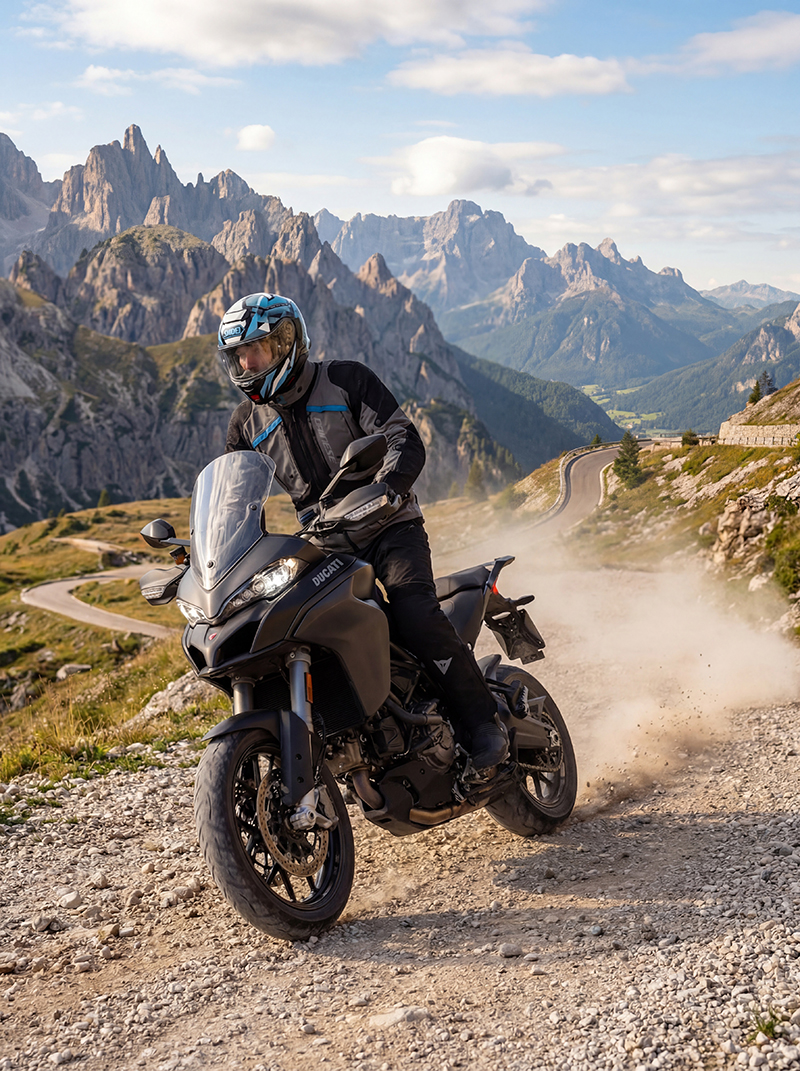
It's this same versatility that might also suggest that the Gullfoss could be a good choice for someone in search of that elusive nirvana; the suit that does everything. Of course, as we've often said, no suit really does everything, but outfits like the Gullfoss get closer than most.
There are of course jackets and pants like this from just about every manufacturer out there; some are more expensive; some might be less expensive than the Gullfoss, but what you get with the Dainese suit undoubtedly represents a lot of bang for your buck.
A great look. Superb comfort. A robust construction. An AA abrasion rating. Level 2 armour. Great venting. Good adjustability. A reasonable thermal component. And a waterproof layer that, with its built-in stretch, really can be worn either inside or outside the jacket or pant.
Despite its recent, financial woes, Dainese is still a mighty cool and well-respected brand. Nobody was ever embarassed to be seen in a Dainese outfit. And yet the pricing here might even be considered entry level. Never has looking good on the bike cost so little. If it's a 3-in-1 suit you're after the Gullfoss really does give you a lot of bang for your buck. Those bucks, once again, being £360 for the jacket and £300 for the pants.
For more information and to buy online, click Dainese Gullfoss suit.


Share this story


