

































































A, AA & AAA Motorcycle Clothing Ratings Explained | Motolegends
Published on: 24 September 2026
To get a better feel for this subject, we need to go back a little.
Before EN17092, which is the CE standard that brings us the A, AA and AAA classifications, there was another standard known as EN13595. It was like EN17092, but the requirements in terms of abrasion resistance more demanding. Instead of A, AA and AAA there was Level 1 and Level 2, and we do recall that back then we did actually offer a couple of products that met the Level 2 standard. There were some jeans from Resurgence and some from Bullitt. But they weren't particularly nice to ride in or walk around in. There was even a waterproof suit from the Italian brand Clover, but it was pretty monstrous and almost unwearable.
The original thinking behind the standard had been that, ultimately, retailers would only be able to term an item of motorcycle wear 'protective' if it was EN13595 accredited. But that never happened because the resulting gear was just too uncomfortable. And so the standard was largely ignored.

The push for a new, more accomodating standard came from the French. Our Gallic cousins, as we all know, love a new law, and so they lobbied Brussels. Now the ostensible reason for a new standard was the high death toll of motorcyclists on French roads. But nobody really bought that. If that really had been the reasoning then there were many other easier means available to the French government to protect their riders’ skins. Like forcing them to wear full-length ‘big boy’ trousers, for example.
In truth, EN17092 was more about was protecting European businesses than it was about protecting European motorcyclists. EN17092 is a classic case of what economists call a 'barrier to entry'. A barrier to entry is defined as 'an operational obstacle that makes it difficult for companies to enter and do business in a given market'. It's a less blunt weapon than tariffs, but a barrier to entry has the same ‘protectionist’ intentions. Such barriers are common and are used by just about every country or trading alliance, although it has to be admitted that the EU has a bit of a black belt in them.
In the case of EN17092, the testing required to meet the standard is complex and bureaucratic to a degree that is disincentivising to many overseas companies. As a business operating from outside the EU you would have to expect to be selling a lot of motorcycle clothing in Europe to make it worthwhile jumping through all the necessary hoops.
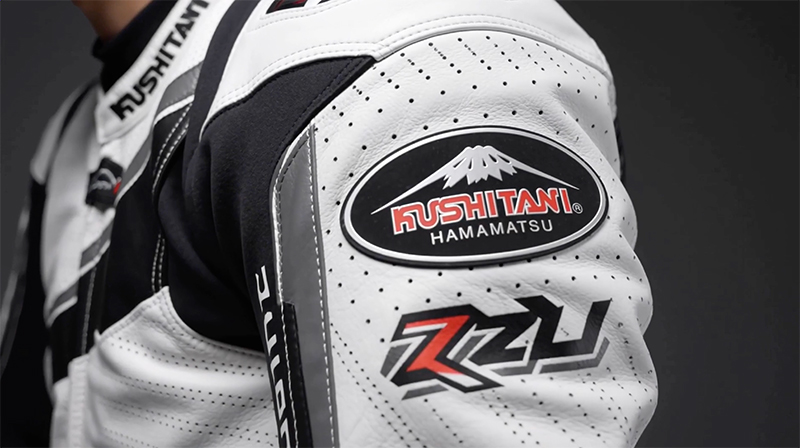
Anyway, it was protecting European motorcycle clothing manufacturers that was the rationale for EN17092, and one might suggest that it has worked. And so, as a result, there are lots of motorcycle clothing brands from, for example, America and Japan that are no longer sold in the EU. As consumers, that potentially gives us less choice, but it seems undeniable that EN17092 has served to protect the interests and welfare of European businesses.
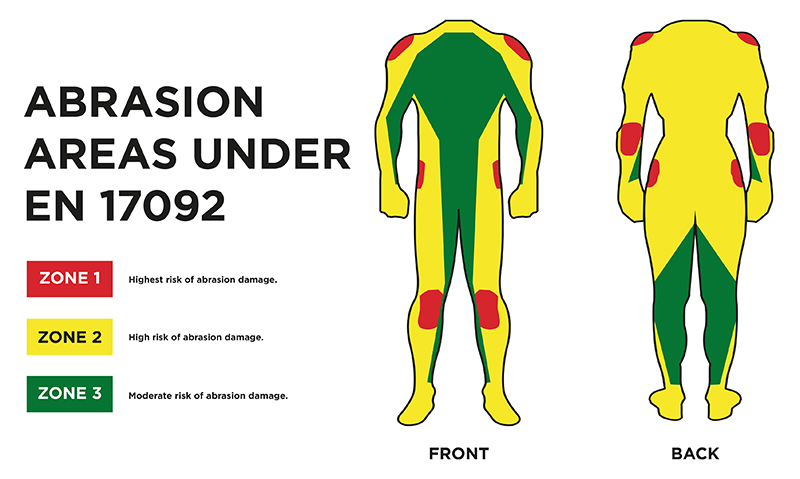
EN17092. What it is and what it is not
Whilst EN17092 is referred to by some as a safety standard it is, in reality, far from being that.
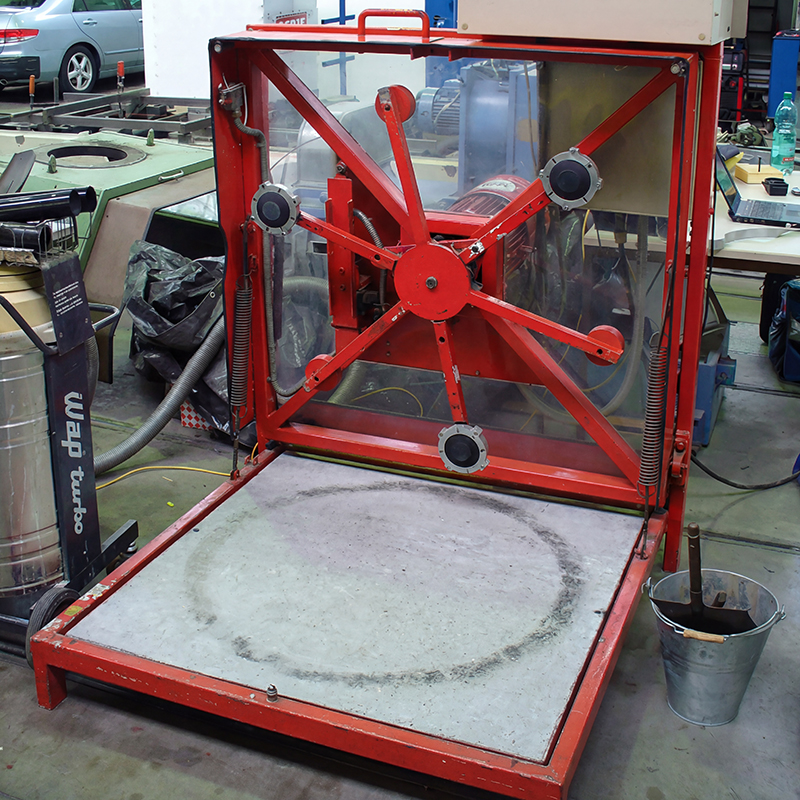
In essence, the test operates on the basis of a number of simple tests that measure the abrasion resistance of a garment's outer fabric, the outer fabric's tear resistance and the strength of the seams where panels of a fabric abut.
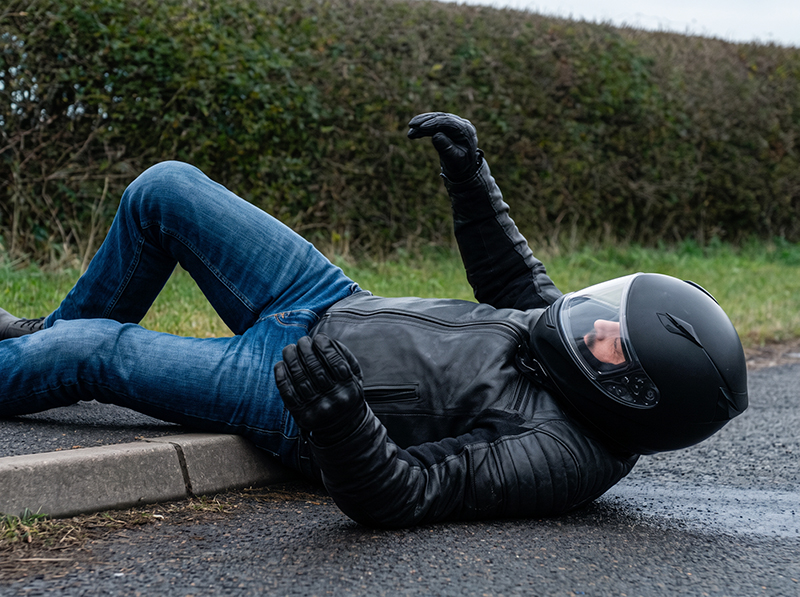
Now we're not going to suggest that the strength of a garment's outer chassis is unimportant; after all, none of us wants to lose skin but, in the way of things, sliding down the road is not a huge deal; it's not usually what does us damage; and it’s very rarely life threatening.
There's an old motorcycling adage: 'It's not the sliding that hurts; it's the stopping'.
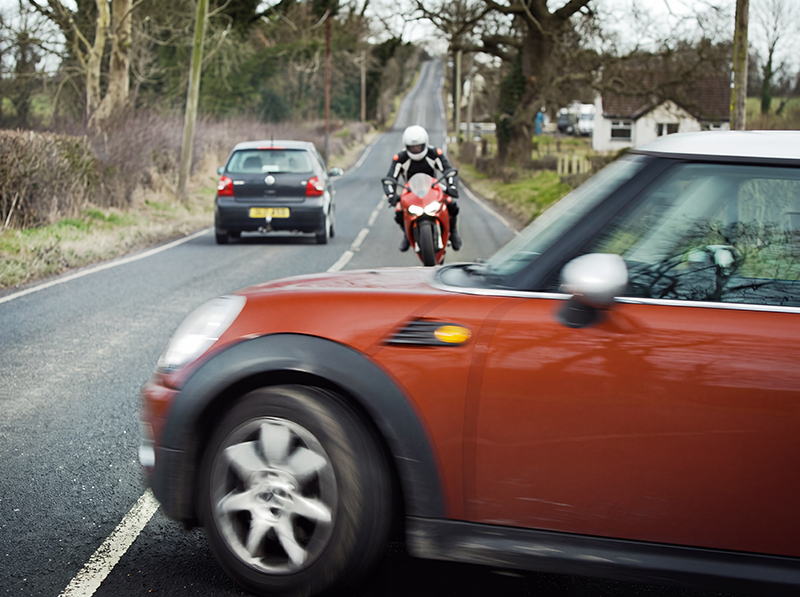
And that's the reality of the situation. It's when we hit something and come to an abrupt halt that we are likely to suffer the greatest injuries. That could be broken or fractured bones. It could be internal injuries. A hard impact can even induce life-threatening shock. But what one has to understand is that when we collide with a car, a kerb, a tree, a wall or some other kind of hard object, the abrasion resistance of our motorcycle's outer wear counts for absolutely nothing. What can potentially help us walk away in such circumstances is the armour we are wearing.
The role of motorcycle armour is explicitly to absorb the energy of an impact, and when we hit something, as far as what we are wearing is concerned that is all we have to rely on. Whether our jacket or pant is A-rated or AAA-rated will rarely make a jot of difference.
Interestingly and tellingly, and it’s what confirms that EN17092 is not really a safety standard, is that it has very little to say about armour. It makes no differentiation between Level 1 armour and Level 2 armour. It doesn't always mandate hip armour in a pant. And at none of the three levels does it stipulate the need for a back protector in a jacket.
Which is why one cannot consider EN17092 to be a meaningful safety standard. If EN17092 had genuinely been about protecting motorcyclists it would have had to take the role of armour much more seriously.
And so whilst we are not suggesting that the abrasion resistance of motorcycle gear is irrelevant, it’s the armour that will nearly always plays a far more important role in protecting a rider from serious injury.
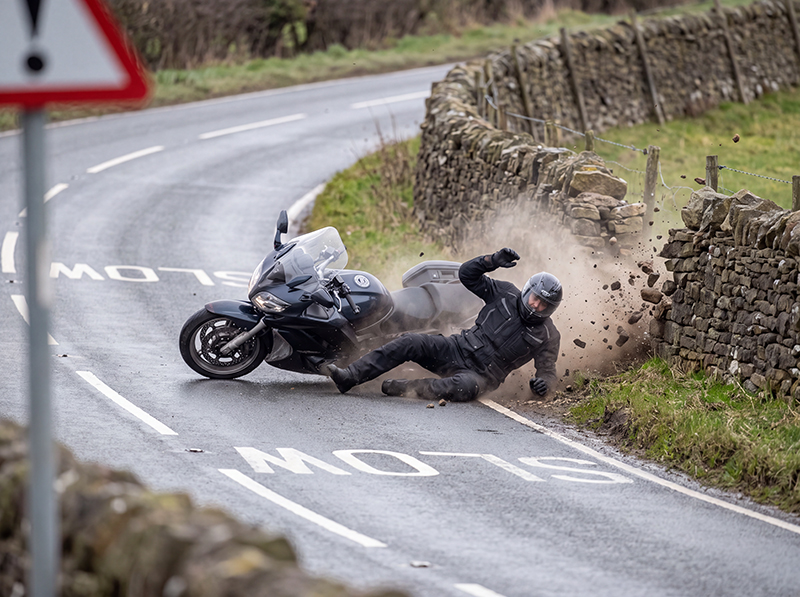
Sliding down the road
I am giving the subject of ‘sliding down the road’ its own heading here because it has to be admitted that the act has, in our view much mistakenly, become the obsessive focus of many motorcyclists.
And there are perhaps reasons for this.
One is that the AAA standard has become the calling card of the budget and entry-level brands. And dominating the market as they do these brands have a significant voice. And so what these companies go to great lengths to suggest is that their AAA-rated clothing is more protective to ride in, which is usually far from the reality.
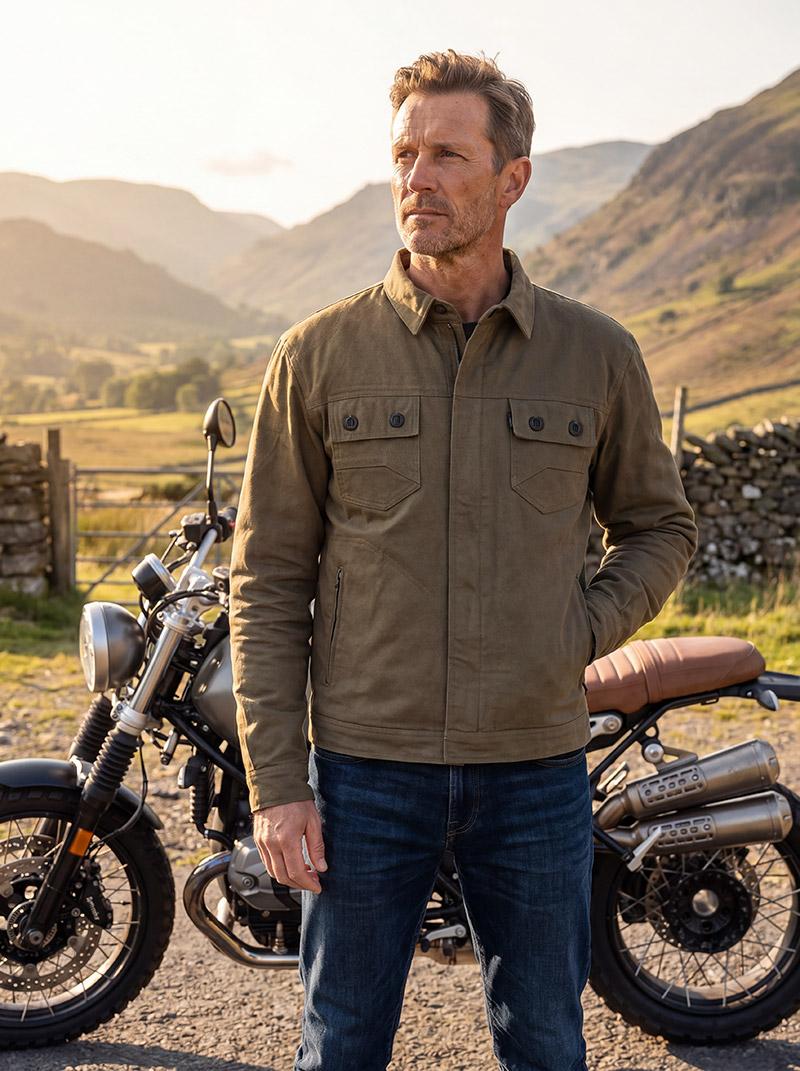
A triple-A rating has become the calling card of these brands because it is both easy and inexpensive to achieve. In fact, you can attain the required level with a material that is as simple and as pure as 100% unadulterated cotton. The resulting material just has to be thick enough to pass the required abrasion and tear resistance tests.
The ability of these brands to achieve the highest abrasion rating has also been leapt upon by motorcycle journalists and social media influencers alike, to both of which groups there's an appeal in heralding the simplistic assertion that you can access what initially appears to be a higher levels of protection for a lower amount of money.
If you're a vlogger banging out videos from your garage your status as a people's champion can only be enhanced by being seen to direct motorcyclists to inexpensive products that ostensibly are safer to ride in. It confirms upon them a kind of heroic status.
But comparing products on the basis of their specifications is the epitome of lazy journalism. There's no subtlety required, no nuancing. Indeed you don’t even really need to understand the relevance of what it is you’re measuring and comparing.

The man from Bennett's will quite unashamedly claim that an AAA rated garment is by definition safer to ride in than an AA one, yet that is far from being the case. In fact, taking the Rukka Nivala with its huge Level 2 armour as an example, there are actually A-rated garments out there that, in a real-world accident, are going to be way more ‘protective’ than all but a very few AA rated ones; and even a lot of AAA-rated ones.
The problem is that the EN17092 classification system has come to shape the narrative. There are a lot of bikers out there who, when it comes to protection, think only in terms of abrasion resistance and A, AA and AAA labels.
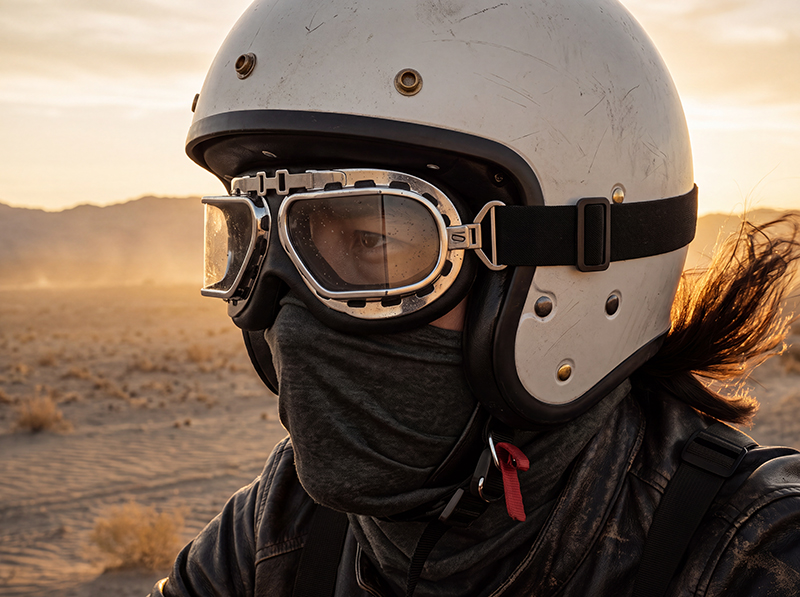
In their heads, most motorcyclists imagine themselves sliding down the road for many tens of yards when they have an accident. And this may well be because the thought of hitting something hard and immovable is simply too painful to visualise; in the same way that many motorcyclists totally block out the idea of what might happen to their faces if they have an accident when riding in an open-face helmet.
But the fact is that when we have an accident on the road we don't tend to slide very far.
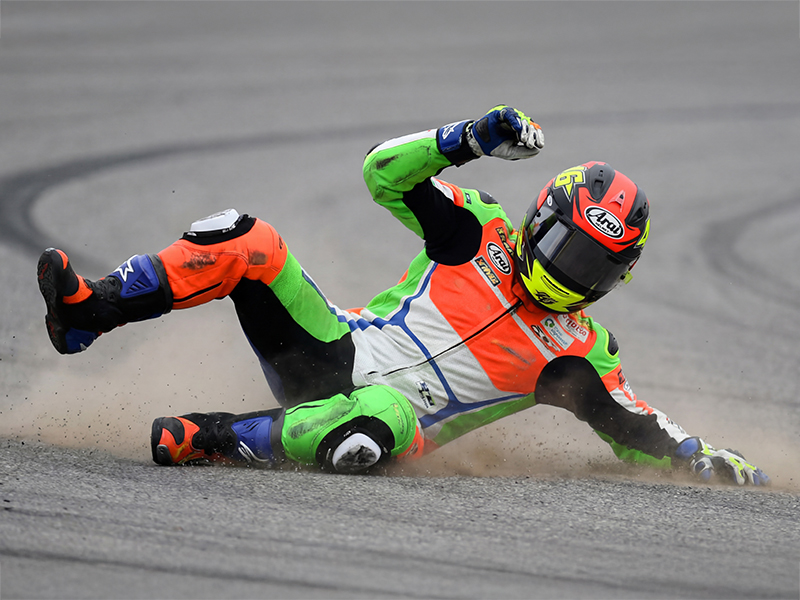
The road is not like a smooth race track, where you can slide a huge distance unimpeded. If, by contrast, we have an accident on the road, we tend not to do much sliding. Rather we roll or tumble, our progress disturbed by painted lines, road markings, cats eyes, repair work, loose chippings, pot holes and the like.
As the level of kinetic energy reduces we may come to a gentle halt by ourselves. But, as we have explained, often the sliding will be brought to a premature halt by something solid.
This is borne out by research conducted by Alpinestars who claim that the average motorcycle accident has a duration of just two seconds. And in two seconds you're not going to be doing a lot of sliding!
Further evidence of this comes from the government's latest motorcycle accident 'Fact Sheet'. What it tells us is that the majority of serious motorcycle accidents and fatalities occur as a result of a coming together with another vehicle. Over one third of all fatalities occur between a motorbike and a single car. Some 50% of accidents resulting in a serious injury occur at some kind of junction.
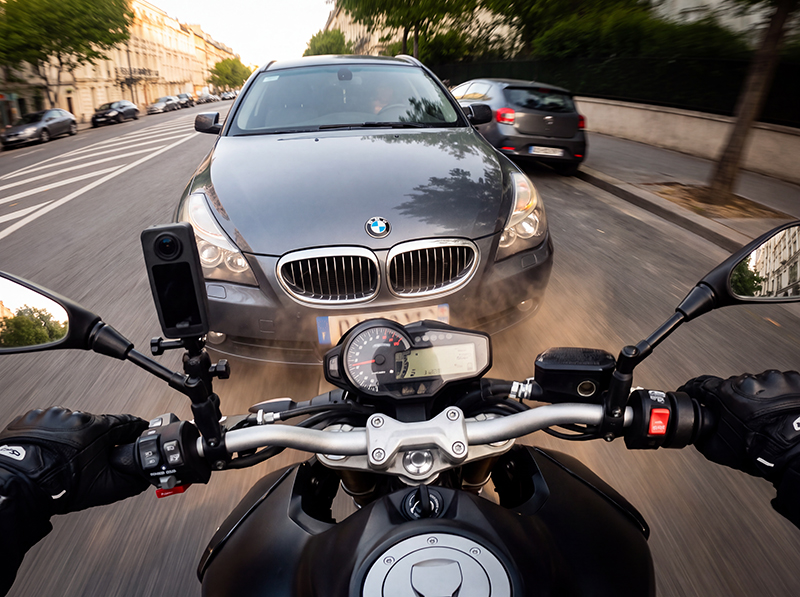
The take out here is that most serious and fatal accidents accidents occur in situations where sliding is rarely going to be a factor.
And so if you think that buying AAA-rated motorcycling clothing is going to protect you better when you are on the bike you are almost certainly deluding yourself.
Your AAA jacket or pant with its highly abrasion-resistant outer fabric will add nothing as you slam into the front wing of a car that has pulled out on you. When you part company with the bike and land on the ground on the other side of the bonnet. Or when you hit a kerb, a tree, a wall or a lampost.
In such circumstances, it's much more likely that it will be the armour that will help to ensure that you can walk away.
So are we being scammed?
There are people out there with a vested interest in talking up the need for AAA rated clothing.
But the fact is that, already, the triple-A standard is way over the top for road riding.
The AAA rating was only ever designed for those travelling at speeds beyond national limits. It was a standard created specifically for the track, where sliding down the tarmac is an ever-present possibility.
But EN17092 did always highlight the fact that AAA garments would, for road riders, come at the expense of heavier weight and reduced wearability.
The AA standard, by contrast, was designed to encompass the needs of road riders involved in either touring or commuting. It was aimed at combining sufficiently high levels of abrasion resistance with rider comfort. And so for anybody riding on the road, the AA classification is more than adequate.
The A standard was designed to protect those who ride more gently, those who commute at lower speeds and those who perhaps do a lot of their riding in urban environments.
What is confusing is that some people have extrapolated, in order to suggest the riding speeds that are appropriate for the different levels.
But EN17092 makes absolutely no mention of riding speeds. The working group, quite logically and understandably, decided that they wanted there to be three levels. A lower one. A medium one. And a higher one. And so it made sense for them to associate the highest level with the track, the lowest level with urban environments. And the middle level with touring and commuting.
But their deliberations were no more scientific than that. There was no real-world testing done in order to equate the three levels with recommended speeds. None at all. Zilch. Nada. Nobody ever dragged a test dummy down the road to come up some form of speed rating for the different abrasion ratings.
Search the internet, and you will see that lots of entities and organisations quote what they consider to be the appropriate speeds, but those numbers never came out of EN17092. Somebody made the numbers up and, as is the way with the internet, others copied them. They are all, however, a fiction.
And I raise this because, once again, there are people out there who, usually for some kind of commercial gain, want to scare us; to direct us to AAA-rated garments. And perhaps even to an AAAA standard!
Only the other week I read an article by a gentleman who really should know better, who suggested that A-rated garments were only appropriate for riding at 20 mph in town. This is garbage; and ignores the fact that there are Police forces up and down the country who routinely equip their riders with single-A rated Rukka suits.
In a recent video Bennetts asked whether leather trousers were more protective than AAA-rated riding jeans. Of course, in reality, all they could only ever have established was whether leather trousers could be more abrasion resistant than jeans.
But we could have saved them a lot of the money they spent on testing at SATRA, because yes if you select a leather that is thick enough it can be extremely abrasion resistant. But if the Triple-A standard for abrasion resistance is already in excess of what is required for road riding, because it was created specifically with the track in mind, why for the road would anybody need a trouser that was even more abrasion resistant?
Where we get to?
Overall, I feel, EN17092 has been a good thing. And that's because it has kept away from the market a whole raft of the kind of clothing, often from the sub-continent, whose main draw was its price, and that in any kind of accident scenario would have come apart at the seams.
But EN17092 has been hugely oversold. EN17092 was only ever a smokescreen; an economic sanction somewhat cynically configured as a standard designed to protect motorcyclists.
Now what we are not saying is that abrasion resistance is unimportant. But it is almost certainly less important than most motorcyclists consider it to be. There has to come a point where the abrasion resistance of a garment’s outer chassis is deemed sufficient for road riding. There must, therefore, come a point where adding ever higher levels of abrasion resistance add little in terms of protecting riders.
And, in our book, the AA rating is what you need for riding on the road. On the road you simply don’t need the level of abrasion resistance offered by AAA rated products.
The other thing to acknowledge here is that in any kind of serious accident situation where an impact is involved a motorcycle garment's outer fabric is going to be less important than the armour it carries.
What is clear, however, is that a combination of self-serving manufacturers, lazy journalists, click-bait chasing social media influencers and so-called consultants have had a role in scaring motorcyclists into thinking that more has to be better, and that they will be safer in AAA-rated clothing.
We think the obsessive pursuit of AAA-rated garments is unhealthy. In some people it creates unwarranted level of angst and fear. In others it instils an exaggerated feeling of confidence.
Triple-A rated clothing will also, in a number of respects, very often have a negative impact on riding comfort and riding pleasure without, in most circumstances, adding meaningful levels of protection.
Motorcyclists are being herded into believing that AAA garments are desirable, whereas in most cases AA garments provide a much better real-world balance of abrasion resistance and rider comfort.
The bottom line is that if you equip yourself with an AA rated jacket or pant with properly proportioned Level 2 armour throughout, it might be suggested that you will have given yourself as good a chance as you can of making it home safely; not withstanding the fact that there will always be accidents where what you are wearing will have no bearing on the outcome.


Share this story


