


































































Direct-to-body venting on laminated motorcycle clothing
Published on: 12 August 2026
Here at Motolegends we sell a fair amount of high-end, laminated clothing.
Whilst we are more than aware of the benefits of laminated membranes, many of our customers will know that we are of the view that drop-liner gear, where the membrane is fixed but hangs independently, is a better option for most motorcyclists.
Drop-liner jackets and pants tend to offer better value. They are more comfortable. And because of the extra air gap between the membrane and the outer chassis they tend to be warmer in cold weather. Crucially, drop-liner garments will not let you down on the waterproofing front in the way that most laminated ones will.
Drop-liner garments are simple to make. Any factory can put a drop-liner jacket or pant together. So simple are they to manufacture that they rarely go wrong. Laminated garments, by contrast, are tricky to get right. You need to use good-quality tape to seal the joins between all the panels. You need to use a lot of tape, and you need to apply it incredibly carefully.
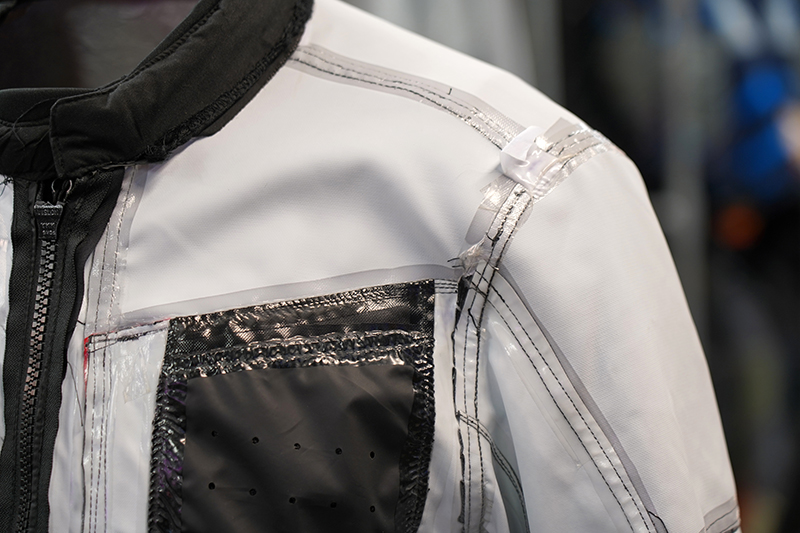
In their attempts to be more competitive on price, most brands cut corners. Cheaper tape. Not a lot of it. And it's slapped on without enough care.
And that's why most laminated garments fail. Don't ride in the rain much, and you'll probably be fine. Ride a lot in the rain, and the chances are that your laminated jacket or pant will be let down.
The exception is gear with laminated membranes supplied by Gore. Click here if you want to know why.
The benefits of laminated, motorcycle clothing
With a laminated jacket or pant, the waterproof membrane is bonded, or heat sealed, to the inner surface of the outer fabric.
Now because the membrane is 'stuck' to the inside of the protective layer, water cannot pass through the outer fabric in the way that it can with a garment with a drop-liner membrane.
When the rain does pass through the outer shell of a drop-liner jacket or pant, it is normally not a big deal, because the independently-suspended membrane will still keep you dry. But after three or four hours in heavy rain the water trapped between the outer fabric and the membrane can start to make you feel cold, because we lose body heat 20 times faster through a wet environment than through a dry one.
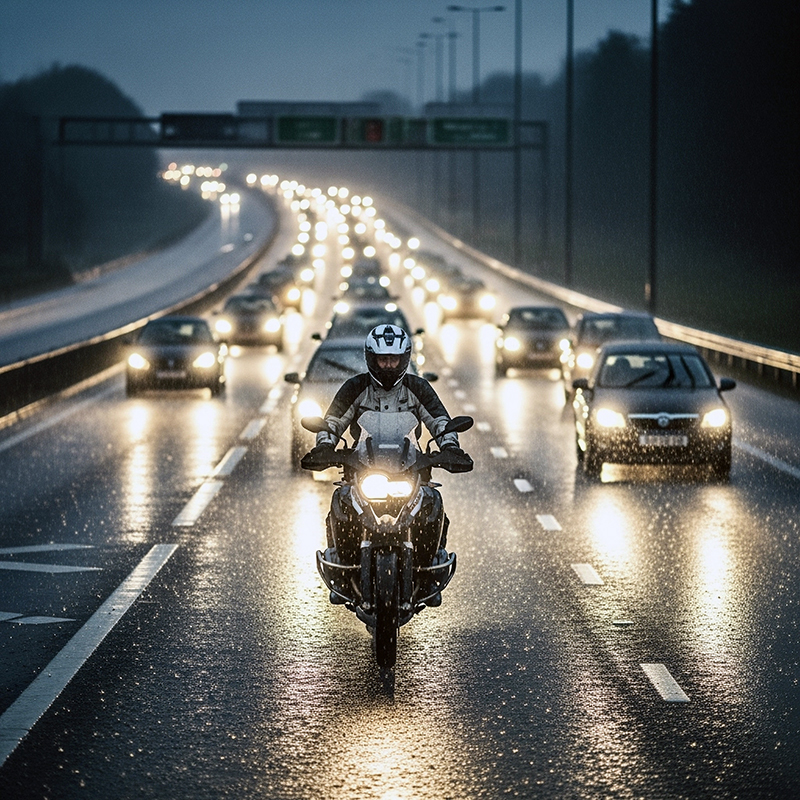
And so it has to be acknowledged that in heavy and prolonged downpours, the kind that most of us rarely experience, a laminated outfit may well serve you better.
There's another benefit to those who have an hour or more's commute into work. Now because laminated garments basically don't get as wet, they dry out much faster. So let's say you have a 70 minute commute into work, and it pours down the whole way. When you get to work, your jacket/trouser will be pretty dry, such that at the end of the day when it comes time to go home it will probably be bone dry.
In summary, you won't stay dryer in a laminated outfit, but because it doesn't get as wet it will dry out faster, and for the same reason, in heavy and prolonged downpour, you will lose less body heat, thus staying warmer.
Now even though, in our view, there are many downsides to laminated clothing, there is one other potential benefit to laminated clothing that is much spoken about.
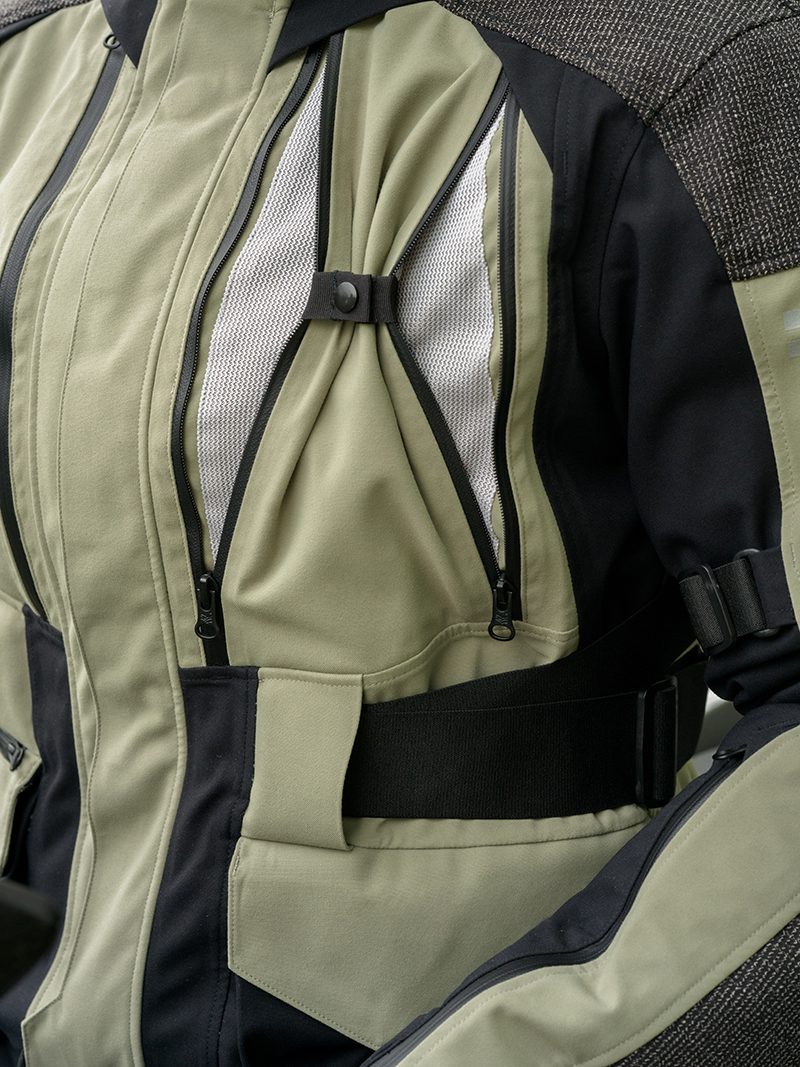
And it's what is known as 'direct-to-body' venting. The theory here is very simple. If you have a zipped vent in the outer shell of a drop-liner jacket the air will be blocked to a degree by the membrane. But when you have a zipped vent in a laminated garment, the incoming air can pass straight through to the body.
That sounds as though it's got to be a good thing; and certainly many of the manufacturers cite 'direct-to-body' venting as a benefit on their laminated wares.
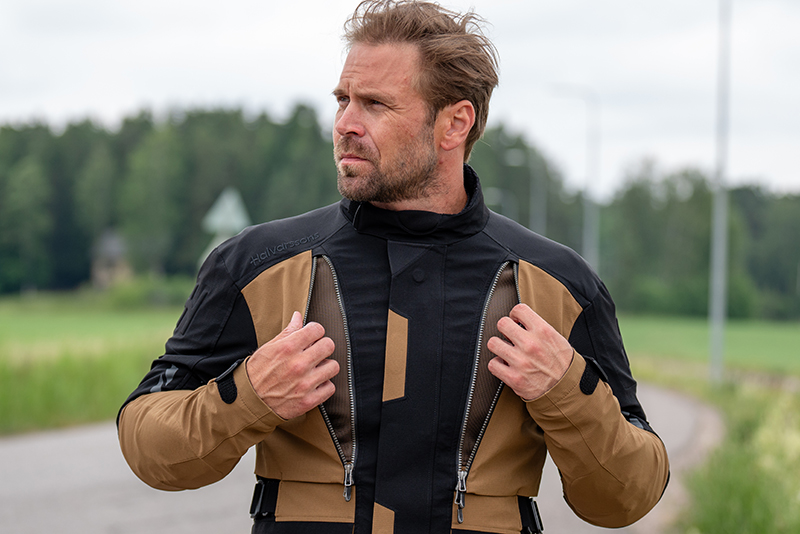
But whilst it's obvious that air will reach the body better if there's no membrane in the way, it's a myth that you will stay cooler in a well-vented, laminated jacket than in a similarly vented, drop-liner one.
Let us explain.
Why drop-liner garments are cooler to ride in in warmer weather
When it's hot, it's good to have a constant flow of oncoming air to cool us down.
Now we have long pointed out that wearing any membrane next to your body when it's hot, or when you're working hard, will impede your ability to sweat. Instead of turning into vapour, any membrane will contribute to sweat remaining in its liquid form. As a result you'll get sweatier and therefore hotter, not cooler.
The 'laministi', of course, would respond, that 'direct-to-body' venting will serve to mitigate the situation.
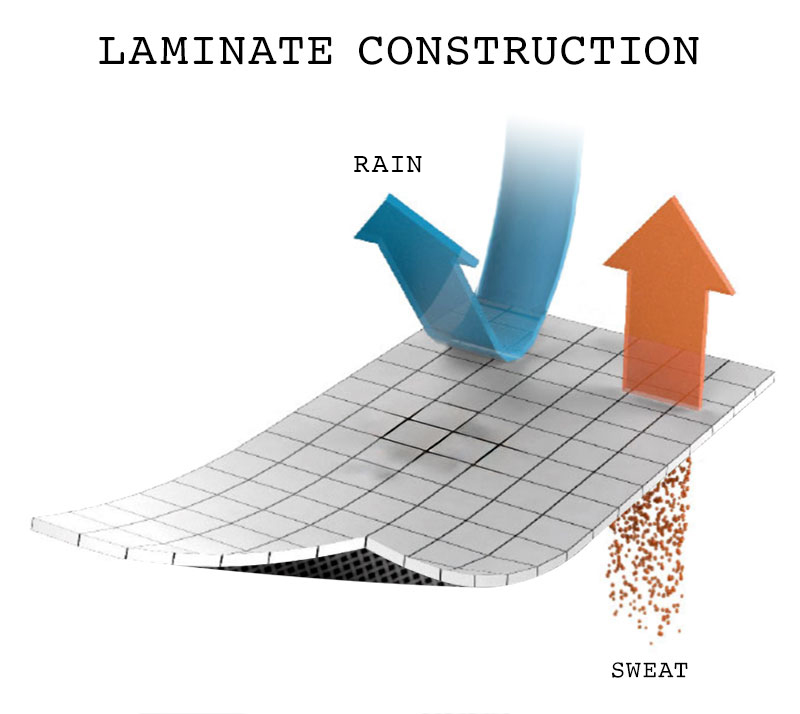
But what is often forgotten is that in warmer conditions the laminated, outer fabric of, say, a jacket presents a near impenetrable barrier to the oncoming cooler air. This air, therefore, cannot play a role in cooling the body down.
Gore, for example, talk about their laminated membranes offering 'complete wind- and waterproofing'. No rain is able to pass through their laminated fabrics. The same goes for the oncoming air.
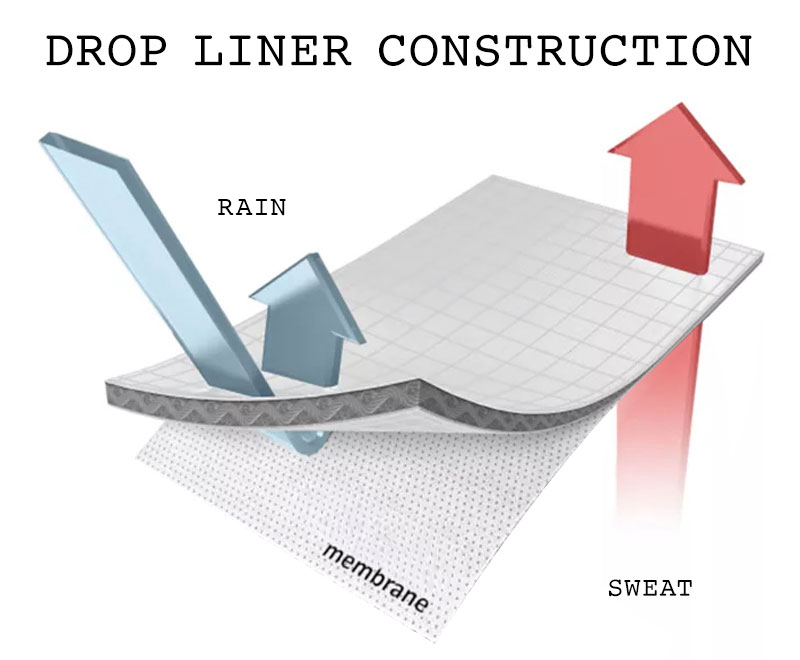
With a drop-liner jacket, by contrast, the oncoming air as we ride along will be able to pass freely into the jacket through the breathable, outer fabric, in the same way as it does, for example, through the outer material of a pair of single-layer jeans. Now the air that passes through the outer won't reach the body itself because of the membrane, but it will create a pocket of cool air between the outer fabric and the membrane. This will have a cooling effect. And it will have a cooling effect everywhere, not just in those specific areas directly behind the vents. This sandwich or pocket of cool air will serve to cool the body down.
And that's why the notion that a well-vented, laminated garment will keep you cooler in hot weather than will a drop-liner jacket is pure bunkum. On a pari-passu basis; that is to say on garments with the same weight of outer fabric and with the same amount of venting, a drop-liner jacket or pant will always be cooler to wear in hot conditions than a laminated one.


Share this story


