


































































Why we get hot and bothered on a motorcycle. And what to do about it
Published on: 12 August 2026
CLICK SUMMER MOTORCYCLE JACKETS TO SHOP WITH FREE UK NEXT DAY DELIVERY
If you’re going to be riding in Europe in the coming months you should be aware that there’s a darned good chance that it could be bloody hot. The kind of temperatures we just don’t see over here.
Now riding a motorbike when you’re really hot is unpleasant. It's uncomfortable, it can get very sticky and, in extremis, it can be dangerous. So we need to understand what is going on when we get too hot on the bike. And importantly we need to know what to do about it.
Now there are two main contributors to over-heating.
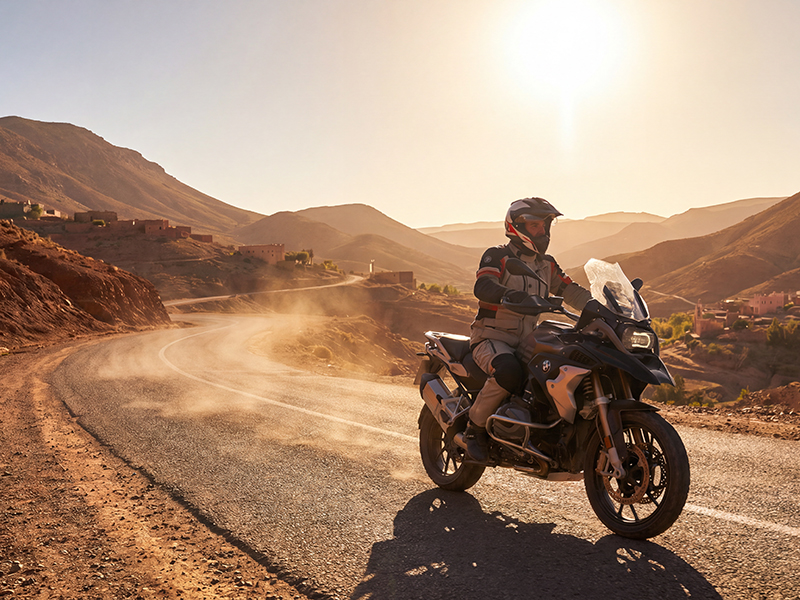
The first, clearly, is the ambient temperature. If you’re riding in temperatures of 30 degrees and above, there’s a good chance that your core body temperature could start to become affected, although what actually transpires may well be determined by how hydrated you are, the kind of riding you’re undertaking and the type of clothing you are wearing. But at an ambient temperature of 35 degrees things potentially become much more concerning.
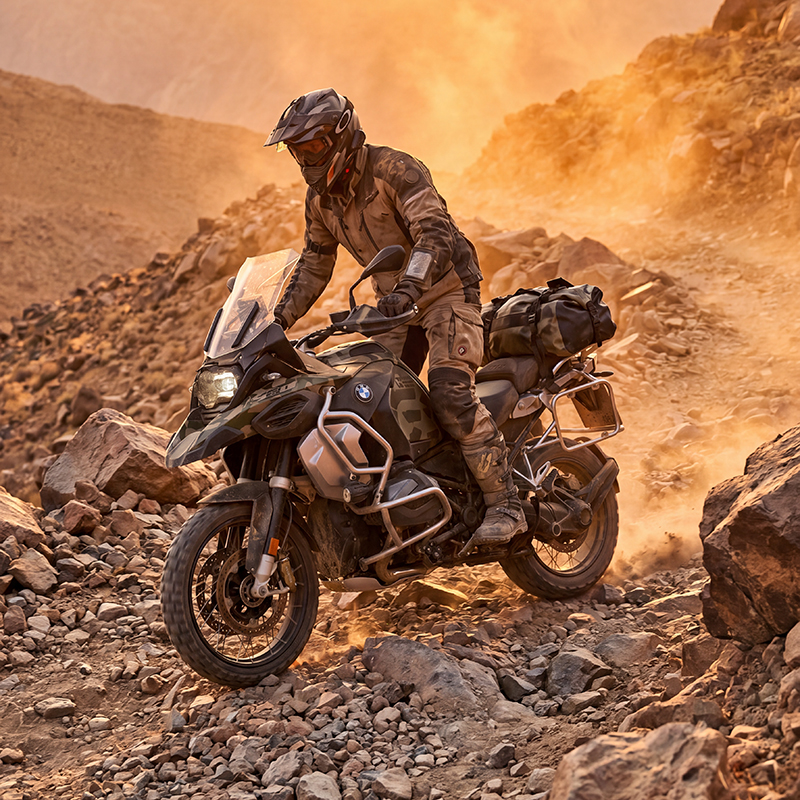
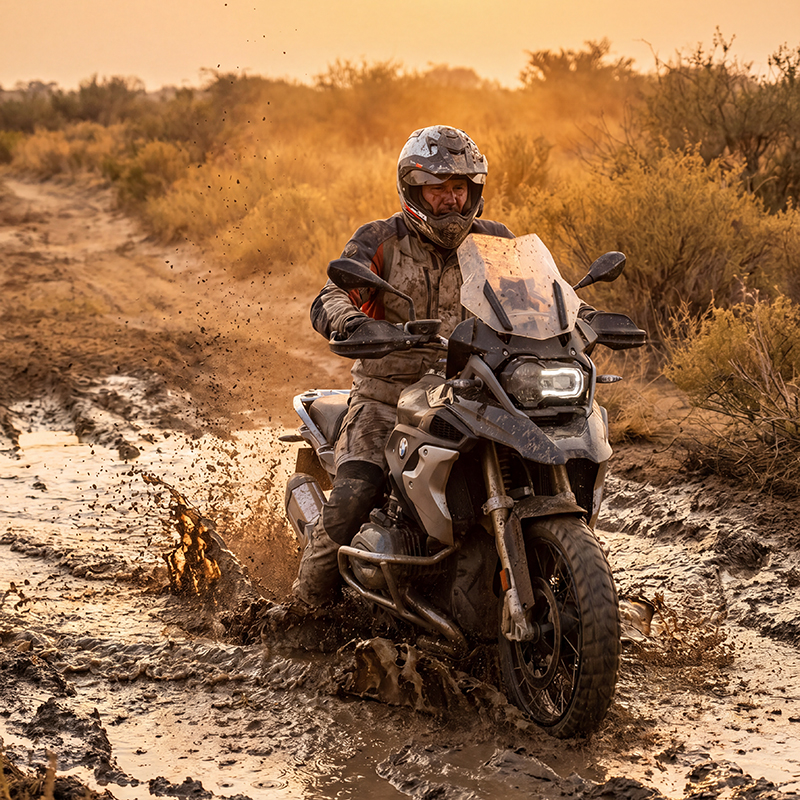
The second contributor to over heating can be working hard on the bike, say when riding off road; or even when we’re negotiating the turns on a demanding mountain pass. When we are exerting ourselves in this way our muscles burn energy. This energy is released as excess body heat, causing our core temperature to rise.
Of course, when you’re working hard in high ambient temperatures; that’s when you really need to take care.
Now our body temperature, in regular circumstances, tends to run at about 37 degrees.
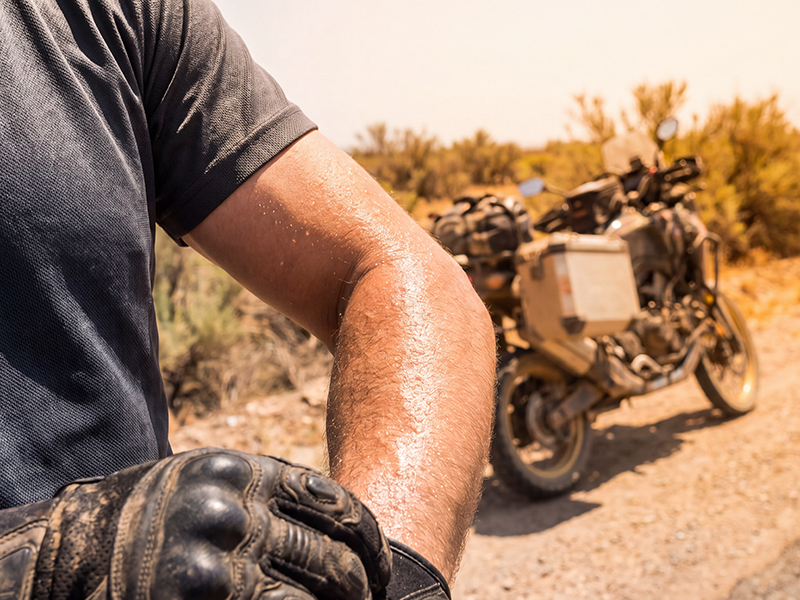
When we get hot we sweat. Sweat is the body’s natural mechanism for cooling itself down. The first thing is for sweat in its liquid form to come to the surface of the skin, but this sweat needs to turn into a vapour and escape from the body for any cooling effect to actually take place. The transition from sweat in its liquid form to sweat in its vaporous form requires energy. Energy is heat, and as this change in states takes place and our sweat in its vaporous form is released into the ether it draws from the skin the heat that has been generated. And so we cool down.
It’s a phenomenon that technically is known as ‘evaporative cooling’. And the whole cycle as described needs to take place if we are to cool down.
But if over heating results in your body becoming too dehydrated then this cooling mechanism can start to struggle. If this happens it can cause your core temperature to climb. And if it climbs to 38 degrees or above you're already in trouble.
Our brains consist about 75% water, and even very mild hydration will rapidly affect our ability to concentrate. We lose attention span and our reaction times increase. Dehydration also leads to heightened fatigue, but what often suffers most is our visual-motor responses. And these are crucial, obviously, when riding a motorbike.
Your skin may be covered in sweat by the time you reach this point but if this sweat, for whatever reason, is prevented from turning in to a vapour you will not cool down.
Of course, a major consideration in such circumstances is your own intake of liquids, so when it’s really hot, or when you’re really hot, you obviously need to keep drinking.
If, though, for whatever reason, you don't get on top of the situation, it doesn't take too long to move from a scenario that we might recognise as 'heat exhaustion' in to one that is termed 'heatstroke'.
This happens when our body's capacity for shedding heat has failed. We are simply too dehydrated. In such circumstances our internal temperature can rapidly soar past 40 degrees. This puts immense strain on your heart, your kidneys and on your brain.
Symptoms are confusion, slurred speech, rapid breathing and a racing heart beat. At this point things are critical. A loss of consciousness is not far down the road.
Now all of this sounds very dramatic, but if we find ourselves riding in the kind of body temperature range we are talking about here the dangers are very real. You ignore them at your peril.
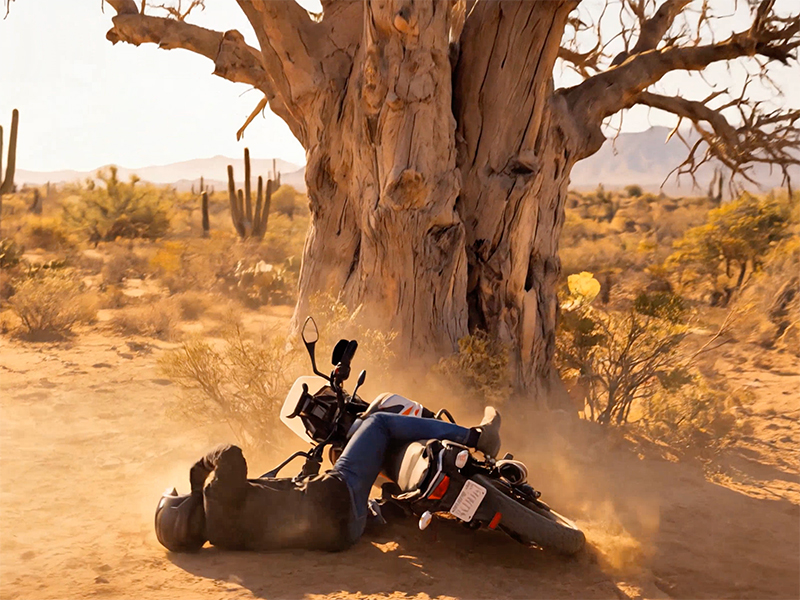
I found myself in just such a parlous state many years ago, following the route of the Baja 1000 in Mexico. Stupidly, I was wearing my Belstaff Trialmaster in an attempt to impress the locals with my understated British style!
It was bloody hot, the riding was tough, and by lunchtime I was out of it. If I saw a tree some way off the beaten track, I would turn off and head straight at it. I was in a whole heap of trouble. Luckily, one of the guides recognised the symptoms and took appropriate steps. But ever since I have been mindful of the dangers that come from riding too hot.
Looking for the simple solution
At times I think that, as motorcyclists, we can be a pretty lazy bunch, not to say stubborn to the point of pig-headedness!
When it comes to riding gear, many bikers are keen to seek out a one-stop solution; a single outfit that will ‘see them right’ through biblical storms, through the freezing cold and through the searing heat. These people often say that, once on the road, they don’t like to stop. They want to put their gear on in the morning, and just keep riding.
Well you don't need to be possessed of huge reserves of common sense to realise that this nirvana is not to be found. There is no other activity outside of motorcycling where any of us would expect to be able to wear exactly the same kit all year round, in every conceivable climactic condition, yet as bikers, for some reason, we still cling to the notion that it's possible.
And even though we should all know better, and be able to work it out for ourselves, I kind of blame the clothing manufacturers, who go to great lengths to try and convince us that if you buy one of their suits it will look after you through all the seasons.
With its waterproof membrane, they will tell you, their suit will protect you from the rain. The zip-in thermal liner will mean that winter is also taken care of. Throw in a couple of vents, and you've got something that will work just as well in hot weather.
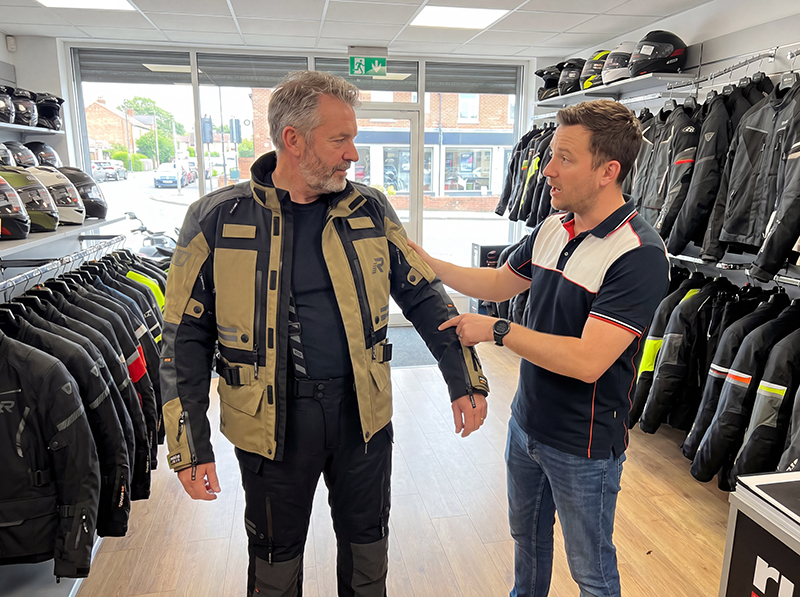
That’s nonsense, obviously, but your average clothing retailer is similarly complicit. So keen are most shops to take your money that very few sales assistants are going to point out that the suit you like the look of isn't actually going to do everything you’ve said you want it to do.
And whatever the suit, however expensive it is, no outfit with a fixed waterproof membrane is ever going to work in hot weather.
Dressing for the warmest weather
The most important point to make, and a lot of people won't want to hear it, or acknowledge it, is that when it's hot which, by my definition, is anything over 25 degrees, you'll be better off, and better able to cope, if you're not wearing waterproof motorcycle gear.
And once again this comes back to how important it is for us to be able to sweat effectively.
Now, as we've discussed, sweating is not defined by the amount of sweat that comes to the surface of the skin. The amount of sweat on the surface of our skin is little more than a reflection of just how hot we are.
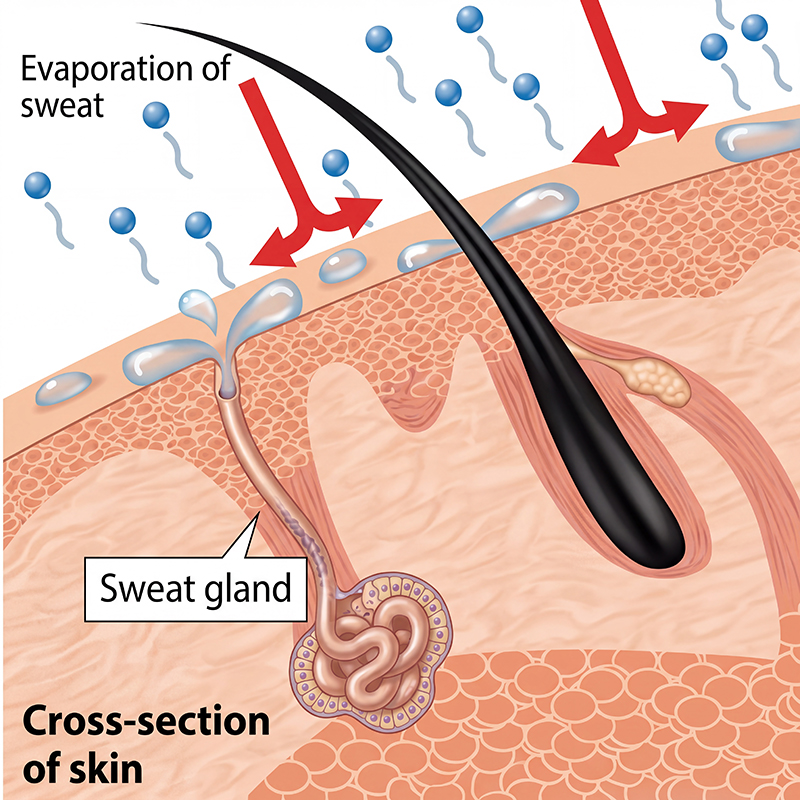
You don't cool down just because you're covered in sweat. The cooling process really only starts to work when our sweat evaporates.
But a waterproof membrane will always make that much more difficult because it gets in the way of the vaporous sweat as it tries to escape.
Of course, we have all been brought up to believe that waterproof membranes are breathable; and to a degree they are. What has to be borne in mind is that we sweat all the time, and most the time a membrane will allow the small amounts of vaporous sweat that we are generating to pass though it.
But when we are generating lots of sweat, which we will be doing when we are really hot, even the most breathable membrane will simply not be able to cope with the amount of vapourous sweat that is trying to pass through it. And so the sweat builds up on the skin. We start to feel clammy. Because the sweat is not able to pass through the membrane at the requisite rate it remains in its liquid form; so we don’t cool down; we just get hotter. And as we get hotter more sweat comes to the surface of the skin. We start to dehydrate.
Of course, the higher the ambient temperature, and the harder you are working on the bike, the more dire the situation becomes. At 25 degrees a waterproof jacket/pant will often start to become uncomfortable. At 30 degrees, the matter is put beyond doubt, whether you recognise the problem or not. At this kind of temperature a waterproof outfit will be causing you to start dehydrating, with all the other issues that that can bring. At 35 degrees in waterproof clothing, you are heading at speed into dangerous territory.
Now I can accept that it makes sense for motorcyclists to look for the simplest solution to this problem. Why wouldn't you? But when it's really hot out there you need to grasp the wider picture.
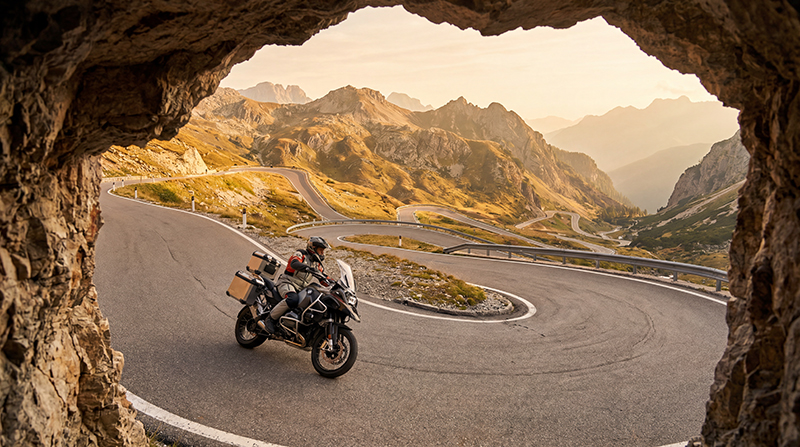
We are talking about motorcycles here. Bikes are fast, and on a modern bike we can be travelling at huge speeds, almost without realising it. Their purchase on the road is through a patch of rubber barely an inch or two wide. We are horribly vulnerable. Piloting a motorcycle is a sufficiently challenging undertaking at the best of times, even when we are in full command of our faculties. When we start to suffer from the effects of dehydration the scale shoots up from challenging to downright bloody dangerous.
And don't go imagining that the vents on your waterproof jacket or pant are going to help a great deal. Yes, you may feel a little local relief behind the vents, but the problem we’re talking about here does not go away with a couple of vents. And that's because everywhere where there is not a vent the sweat will continue building up.
A few years ago some clever marketing wallahs started to perpetrate the myth that laminated jackets and trousers cooled you down better because there was no membrane behind the vent zips in the way that there would be on a drop-liner garment where the fixed membrane hangs independently. It was a phenomenon they labelled ‘direct-to-body’ venting.
But a myth it is. And that's because in a drop-liner garment the oncoming air can at least pass through the outer shell to create a pocket of cooler air between the outer fabric and the membrane. But no air at all can pass through the outer fabric of a laminated jacket because the bonded membrane will prevent it from doing so. The truth is that in the very hottest conditions the worst type of waterproof jacket or pant to wear is a laminated one; however well vented it might be.
The bottom line here is that, however your waterproof garments are constructed, they are not your friend when the temperatures start to rise. Indeed there comes a point where they are, quite simply, your worst enemy.
The best thing you can do is accept that if you ride all year round, and especially if you ride off road or like to go touring in warmer climes, you are going to need more than one set of kit. One for the cold and wet. Another for the warm and dry.
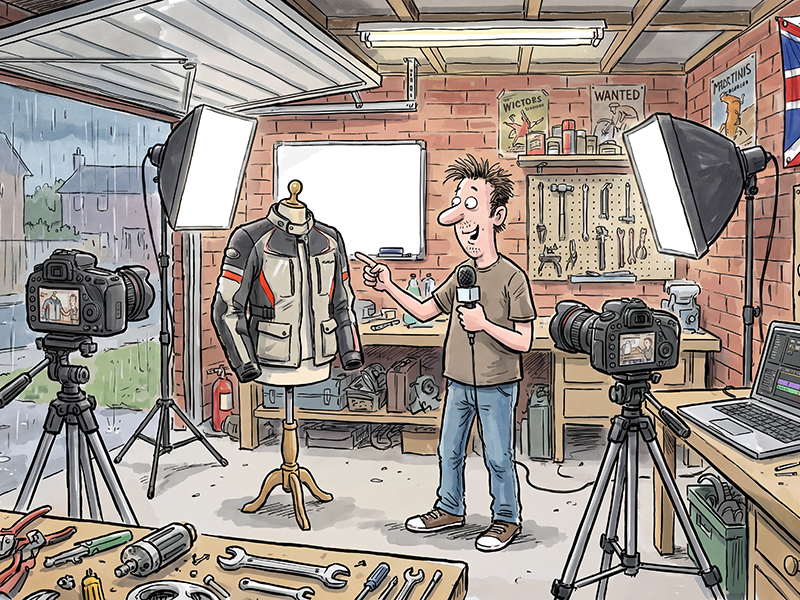
And anybody who tries to convince you to the contrary either has an agenda and is being disingenuous, or does not know what he's on about, and is probably a social media influencer working from their garage.
So what should you wear on the bike to try and stay cool?
For the sake of expediency, I am going to talk from hereon in about jackets. It just makes the syntax easier, but pretty much everything I am going to say applies equally to the lower half. To pants and trousers.
Given what I've said, the starting point obviously is anything without a waterproof membrane.
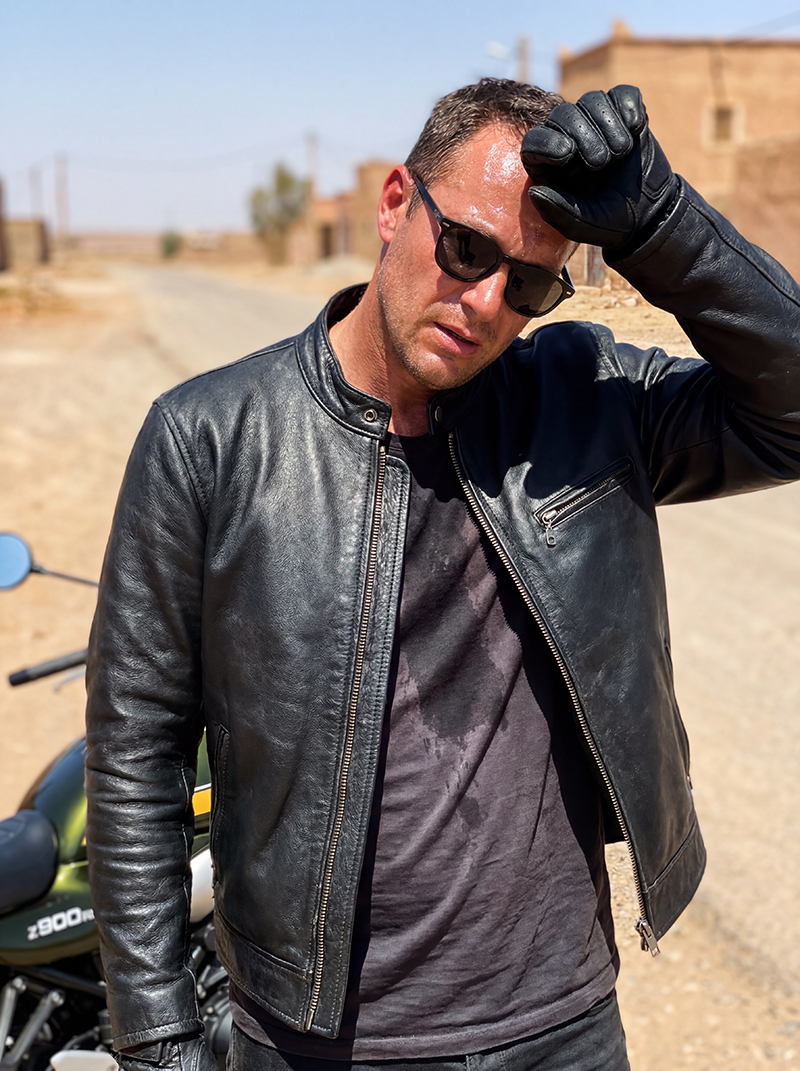
The exception to this rule is anything in leather. And that's because leather doesn't breathe anywhere near sufficiently to cope with hot weather. Even perforated leather. When it's hot leave the leather one-piece or two-piece at home. We all think we look cool in leather, but leather just doesn't work when the sun is blazing. Discretion is the better part of valour. Rather survive the entire ride than look cool for the early part of it!
Now whilst the absence of a membrane is, as I’ve suggested, the ‘sine qua non’ when it comes to staying cool there are lots of different types of jackets and pants without membranes; and not all of them are going to be equally effective when it comes to helping you stay cool.
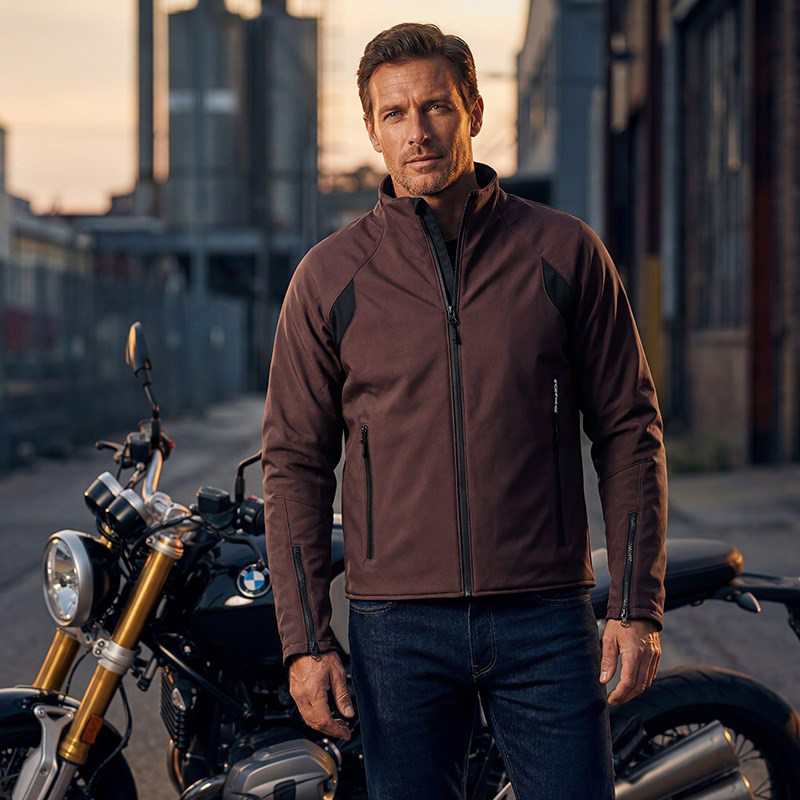
Some jackets without membranes are heavy, and even padded. I’m thinking particularly of softshell jackets. Such jackets won't flow a lot of air.
Some jackets without membranes are lighter, and so may flow a bit more air, but probably not enough for the warmest conditions.
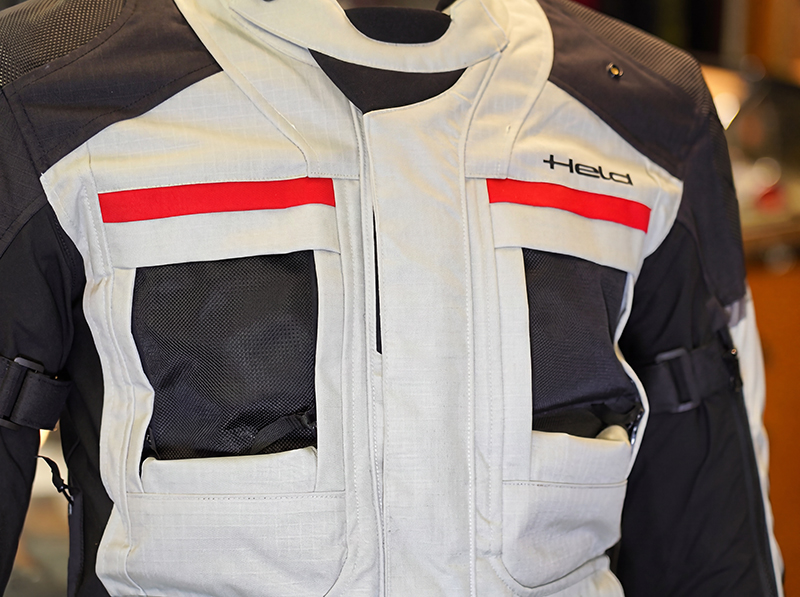
Some non-waterproof jackets have vents. And these vents will be helpful. On a warm day a lightweight, non-waterproof jacket with vents is going to be a whole lot nicer to ride in than a waterproof one.
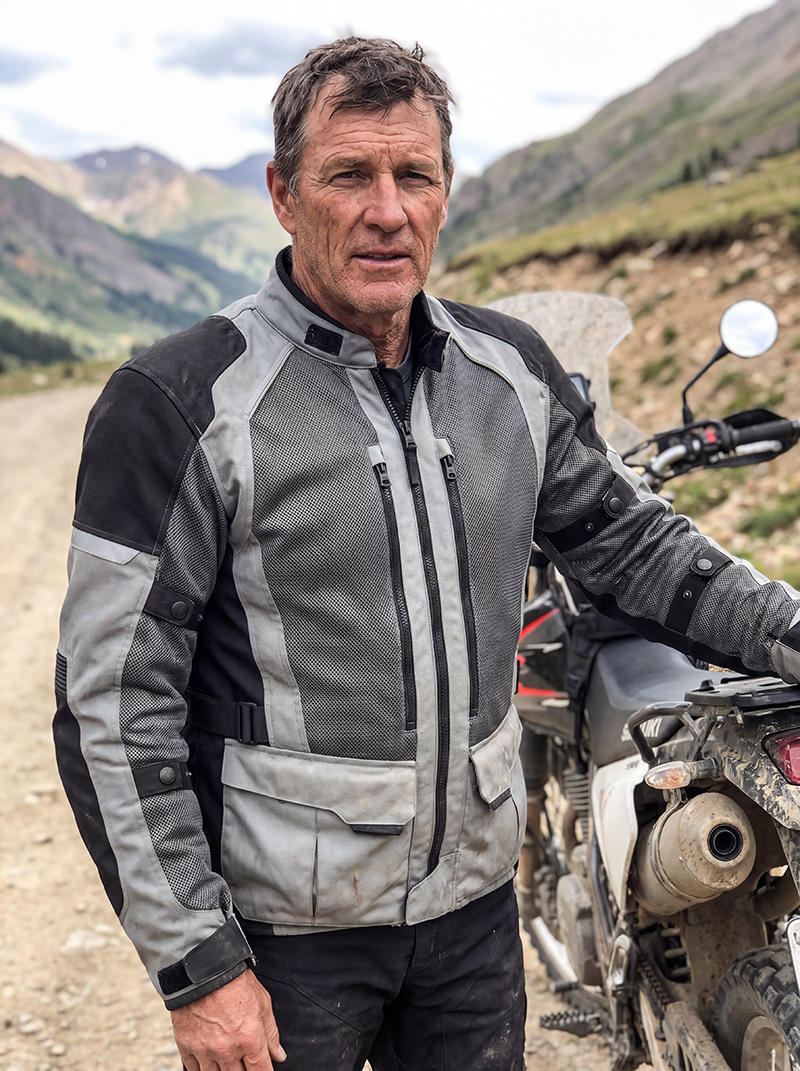
From here the next step is to something that contains panels of an open-weave mesh of some description.
Mesh jackets will flow a lot more air than jackets without mesh panels. The oncoming air will cool the skin down. This means the body will not have to secrete so much sweat to the surface of the skin. And this is a good thing because if we sweat less we dehydrate less. And dehydration is what we are trying to avoid.
A mesh jacket will also makes it easier for whatever sweat there is on your skin to evaporate. And, as we have spoken about, it is only when our liquid sweat evaporates that the sweating cycle can be completed, thus allowing heat to be drawn from the surface of the skin.
So, all in all, a mesh jacket is a good call in hot weather. There are lots of them out there. And many of them are cheap as chips. Sometimes there's a reason for such jackets being so cheap, but that's perhaps a topic for another day. For now, we can all agree that a mesh jacket is a step in the right direction.
But a typical mesh jacket is not, perhaps, the ultimate solution. In the mesh areas cooler oncoming air can enter the jacket, and hot air coming off the body can pass out through it. But where there is no mesh this won't happen to the same extent.
What this suggests, of course, is that you should go for a mesh jacket with larger expanses of mesh. You want mesh in the chest and core. You want mesh down the sleeves. And importantly you want a large expanse of mesh in the back to allow your sweat to vaporise and escape.
But in recent years we’ve started to see a new type of mesh jacket; something that might be likened to a mesh jacket on steroids.
Now I really didn't want this video to be about specific products; I saw it more as a general treatise than a means to highlight particular garments, but let me say only that there are a number of jackets and trousers from people like Klim and Rukka that are made in this way, and that we are particular fans of.
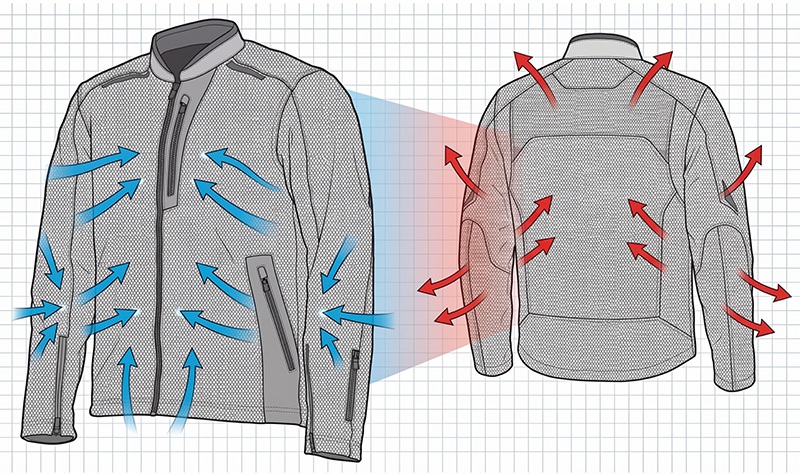
What they all have in common is that every single panel flows air. And that's important because when it's really, really hot you need the cooler oncoming air to enter the front of the jacket. The chest. The core. The shoulders. The sleeves and so on. This will cool the skin to reduce the need to sweat, and that's good, obviously, because the less we sweat the less we dehydrate.
What we then want is for the cooler air that enters the jacket at the front to pass all around the body, and exit through the loosely woven mesh on the the back, thus helping the sweat that has built up on the skin to evaporate and escape.
This then is the perfect kind of jacket for riding in hot weather; lowering the body's temperature to reduce the amount of sweat, then helping what sweat there is to evaporate, thus drawing further heat from the skin.
The kind of jacket I’m talking about is the perfect antidote for riding in the hottest of conditions.
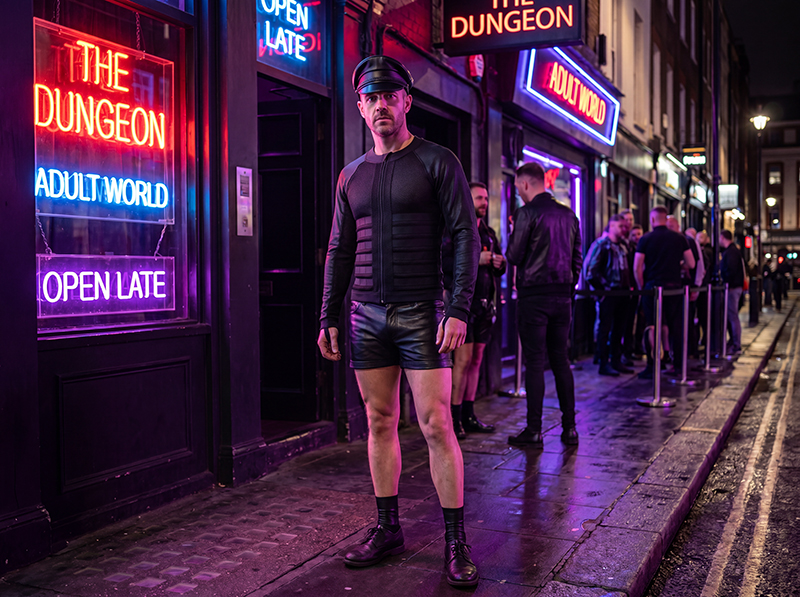
Now there are some people who swear by those mesh jackets that fit to the body like a girdle. You know the ones I’m talking about. They look like something that would gain you free entry into a dodgy downstairs Soho fetish club.
But such jackets simply won’t work as well from a cooling perspective. Yes, they feature a fair amount of mesh panelling, although they tend to be only part mesh like a traditional mesh jacket. But the main problem we have with this style of jacket is that they are designed to be worn tight to the body. And of course such jackets have to be worn tight because a large part of their rationale is to clamp the elbow and shoulder armour firmly in place.
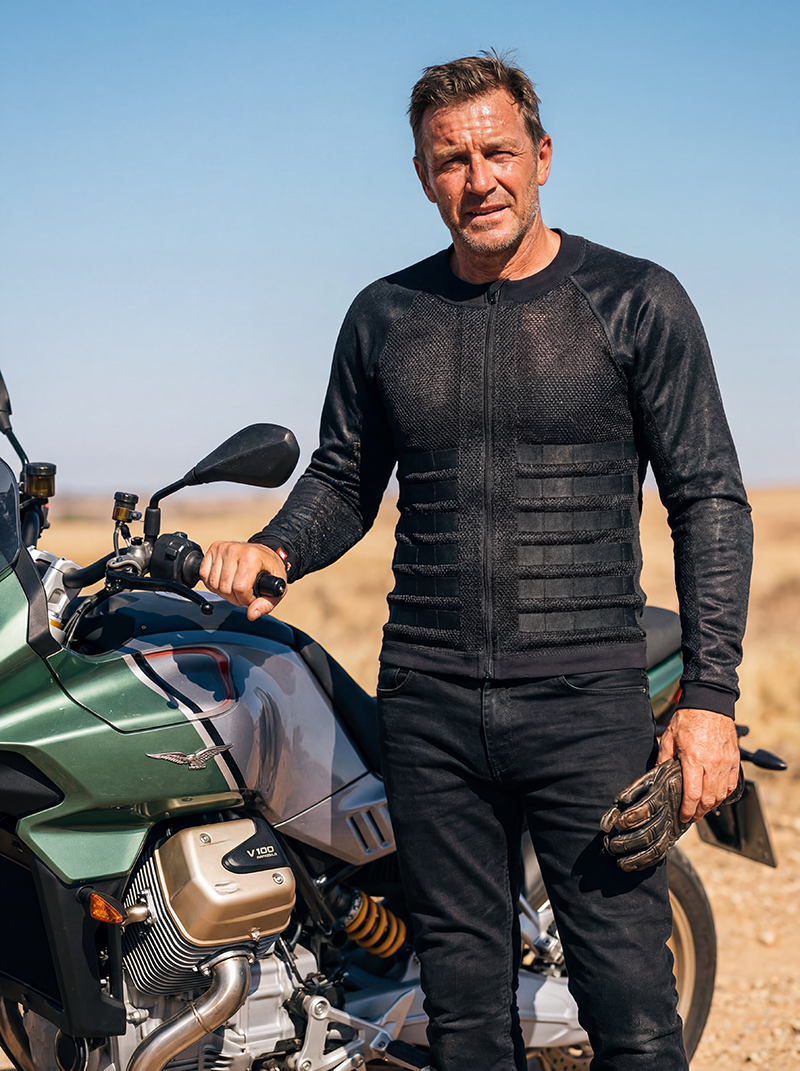
From a purely protective standpoint this may well be seen as a positive. But air can only enter the jacket in certain areas, and the way these jackets fit does not allow air to flow freely around the body. So jackets of this ilk will not be as effective at cooling the body down.
The problem is that, as with traditional mesh jackets, wearers will often feel the blast of the oncoming air hitting their chest; and this makes them feel as though they are cooling down. But that's actually a bit of an illusion; more a perception than a reality. Staying cool is about more than a localised blast of air.
Other things you need to consider
Taking on fluids is, in some ways, the key. If we were always sufficiently hydrated the problems we have been talking about here would barely be worthy of consideration.
But we tend not to drink enough when we’re on the bike. And there are a number of reasons for this.
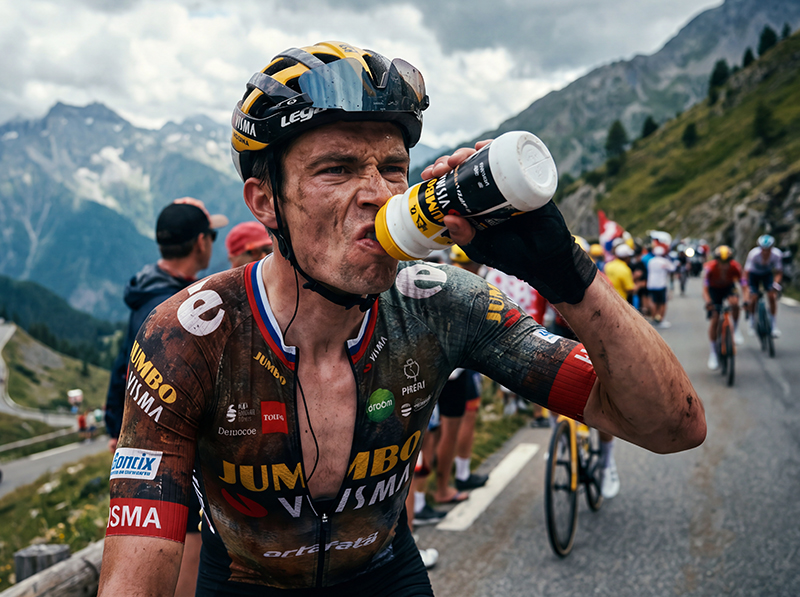
First, drinking when you’re riding a motorcycle is not as easy as it is in the car when you can take a swig whenever you want. Ride a bicycle, and the chances are you’ll have water bottles in holders. But when we’re on a motorcycle taking on fluids is not so easy, and so we tend to forget about the need to keep on drinking.
There’s another thing; and it’s a touch indelicate.
A lot of bikers don’t drink enough because stopping to have a pee can be a pain. We see this a lot in the shop. We offer somebody a cup of tea or coffee before they leave. They decline, retorting that they have a long ride home and don’t want to have to stop!
Of course, to nobody does this apply to more than middle-aged men with potential prostate issues. You already pee too much, so the notion of taking on fluids before a ride, short or long, is usually not a welcome one. Such concerns are understandable, but not drinking just adds to your worries, I’m afraid!
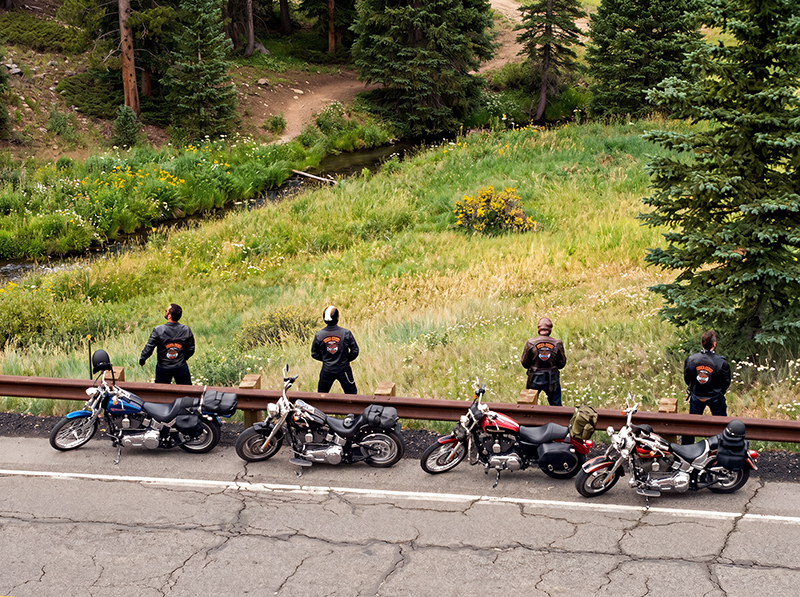
Some people feel particularly pressurised to abstain if they’re riding in a group; perhaps remembering those embarassing scenes in Wild Hogs. And so they don’t drink before setting out, figuring that they can top up after the ride perhaps. But, as we have seen, that’s a false economy. You don’t need to be hydrated when you’re sat at home in front of the television. You need to be hydrated when you’re on the road.
The solution is simple. Drink more. And drink as often as you can. If it is hot, and you’re sweating you won’t need to pee as often anyway; and that’s because your kidneys will conserve water and produce less urine. But heck if you do have to stop for a pee so be it; better that than losing control of the bike.
Another important consideration in hot weather is wearing the correct base layer.
Lots of bikers wear a cotton T-shirt as a base layer; and in hot weather that’s a big mistake. The right base layer is hugely important when you’re sweating.
The role of a base layer is very simple. Its sole task is to aid the wicking of moisture away from the skin. Your sweat then has a fighting chance of being able to transition into a vapour so that the cooling process can begin.
But this won’t happen if you wear a cotton shirt. Cotton is made from long-yarn fibres, as they are known. And these fibres don’t wick moisture; they absorb it. When you sweat profusely in a cotton shirt it will develop wet patches. You will remember this from when you played football in break time at school. But when your cotton base layer is covered in sweat it can no longer breathe. Because your sweat will not be turning in to a vapour you won’t cool down. Quite the reverse; you will get hotter; and so the whole dehydration thing is exacerbated.

Back in the day, rugby players and football players ran up and down the pitch all day in heavy-duty cotton shirts. Now they all wear synthetic Nylon ones; and that’s because synthetics are much more breathable. Being breathable, the sweat is wicked away and the players run cooler. Anyway, now you know. And just perhaps this is all starting to make sense!
I’ve said that what I would be talking primarily about today is jackets, but that everything I have said is more or less applicable to the lower half. So waterproof pants of any description are best avoided. Ditto leather pants.
Single-layer jeans are good up to a certain temperature; and are certainly better than lined or Kevlar ones. As with jackets, there are pants with vents, and there are pants with mesh panels.
The same thinking, of course, applies equally to boots and gloves. Boots and gloves without membranes will help you run cooler.
And then there are helmets. Now we just don’t have it in us to recommend open-face helmets. Yes, an open-face helmet would help you stay cooler in hot conditions, but for us the trade off in terms of safety is too great. For anything other than popping down to the shops we are not fans of open helmets. Getting a bit dehydrated is one thing; losing part of your face is another!
Which brings us, predictably perhaps, to our favourite kind of helmet, the flip-lid. Now contrary to what some people believe, flip-lid helmets are not designed for riding when the chin bar is up. Do that and all you’ve got is a very unaerodynamic open-face helmet.
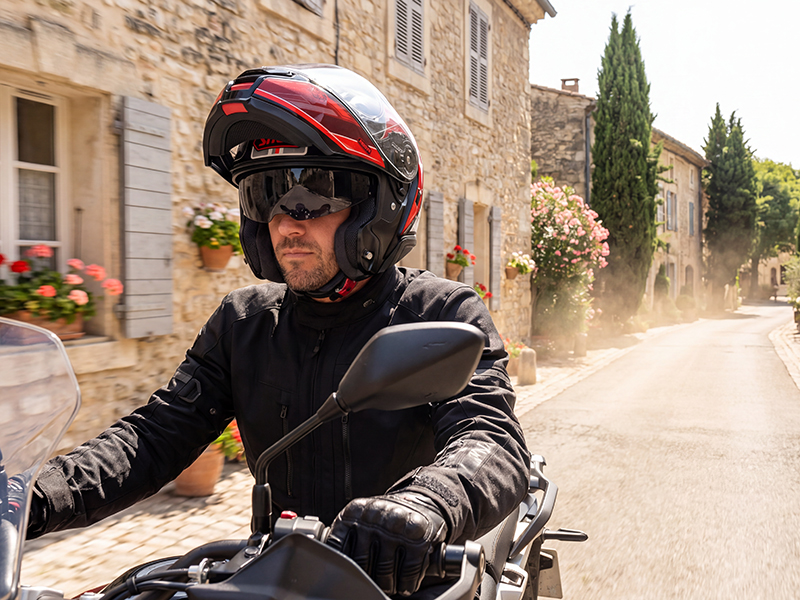
The thinking behind flip-lids is that when you’re riding slowly through the centre of a bustling town or down the deserted high street of a quiet village you can raise the chin bar to get some cool air on your face. This will have a cooling effect, but the idea is that when you pick up speed again you lower the chin bar. It is because of this that I would have to say that in warmer weather a flip lid just makes a lot of sense.
Let me touch finally upon airbag vests.
Now airbag vests are, by definition, airtight. They simply don’t breathe. They’re not meant to.
Indeed we have long thought that, in the hottest conditions, an airbag can be more of a hindrance than a help. If it contributes to dehydration an airbag can represent the problem more than the solution.
Now clearly we are not saying that you shouldn’t wear an airbag, but if it’s hot out there you potentially need to stop a lot more often to get some shade, and you’re going to need to take on a lot more liquid. Nevertheless, if you ride in really hot weather in a waterproof jacket and an airbag, you are going to need to be particularly vigilant.
But the basic conflict here is a serious one. At every stage of this discussion we have emphasised the need to avoid waterproof membranes, or indeed anything that hinders venting and breathability. And membranes aside there’s little that you can wear on a bike that will hinder venting and breathability more than a ruddy great airbag.
This is one you’re going to have to work out for yourself, but you are going to have to weigh up whether wearing an airbag in the very hottest of conditions really makes sense. Nobody doubts that, in an accident, an airbag can prevent injuries, but if wearing an airbag increases the chances of having an accident in the first place, then what you’re facing is a conundrum; a conundrum that only you can solve.
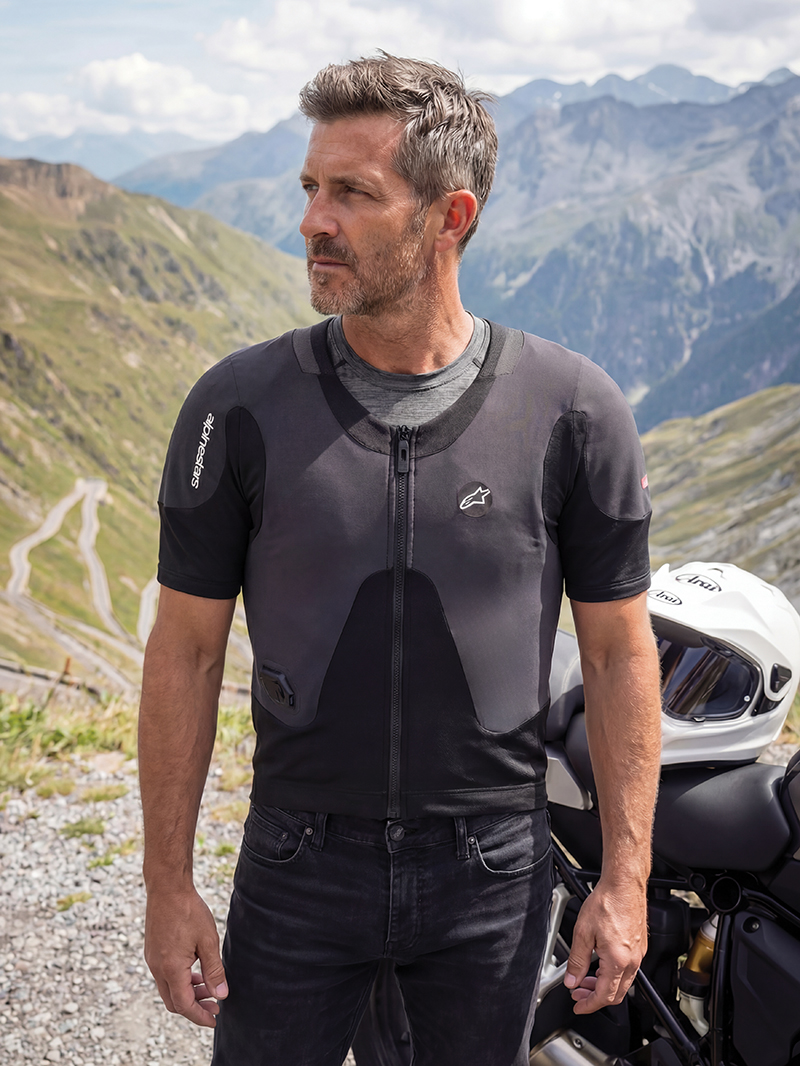
gain, I really didn’t want top talk about specific products today, but my only observation would be that an airbag like Alpinestars’ latest Plasma Tech Air 5 is going to do a much better job at helping you stay cool than any other airbag on the market. It’s still an airbag; and you’ll run warmer if you wear it; but you’ll probably run less warm in it than any other airbag out there.
If I was riding anywhere hot there are some airbags, I have to tell you, that I would avoid like the plague. Although, to be fair, there are a lot I would avoid like the plague even if it wasn’t hot!
The last word
Getting too hot on the bike can be dangerous if it causes our bodies to dehydrate. And we don’t need to dehydrate much for our concentration and other faculties to be affected. I think I read that a 1% loss in bodily fluid is enough to make a discernible difference.
In normal circumstances, when you get hot, having a cold shower or putting the air conditioning on are great remedies. But neither are particularly appropriate when riding a motorcycle.
On the bike you need to do everything you can to promote effective sweating; and by effective we mean creating a situation where your sweat can turn into a vapour to allow evaporative cooling to take place.
You want gear that breathes. You want to get as far away as you can from waterproof membranes. And leather gear!
And the reason we want to cool down is not purely because it’s a more comfortable state to be in. The imperative here is that when we run cooler we don’t sweat as much and when we sweat less we dehydrate less.
It’s dehydration that’s the real villain here. Because it affects our ability to control the bike.
The solution is twofold. Dress right. And drink more. Do both of those, and you should have a better chance of making it home safely.
For more information and to view online, click summer motorcycle jackets.


Share this story


