























































The most protective motorcycle suit money can buy
Published on: 11 November 2026
CLICK RUKKA MOTORCYCLE PROTECTIVE WEAR TO SHOP WITH FREE UK NEXT DAY DELIVERY
I am going to romp through the first part of this story because it covers territory that I have gone over many times before. What is more interesting perhaps are the numbers we have long sought from Rukka that we have now received, and that unequivocally prove why Rukka’s suits are more protective than anybody else's.
I'll go over these numbers towards the end.
Now when it comes to the protective qualities of a motorcycle suit, there are two key components.
There's the abrasion resistance of an outfit's outer fabric and then there's the armour that it carries.
In recent years, a lot of motorcyclists have been persuaded that, when it comes to being protected in an accident, the most important consideration is a garment's resistance to abrasion.
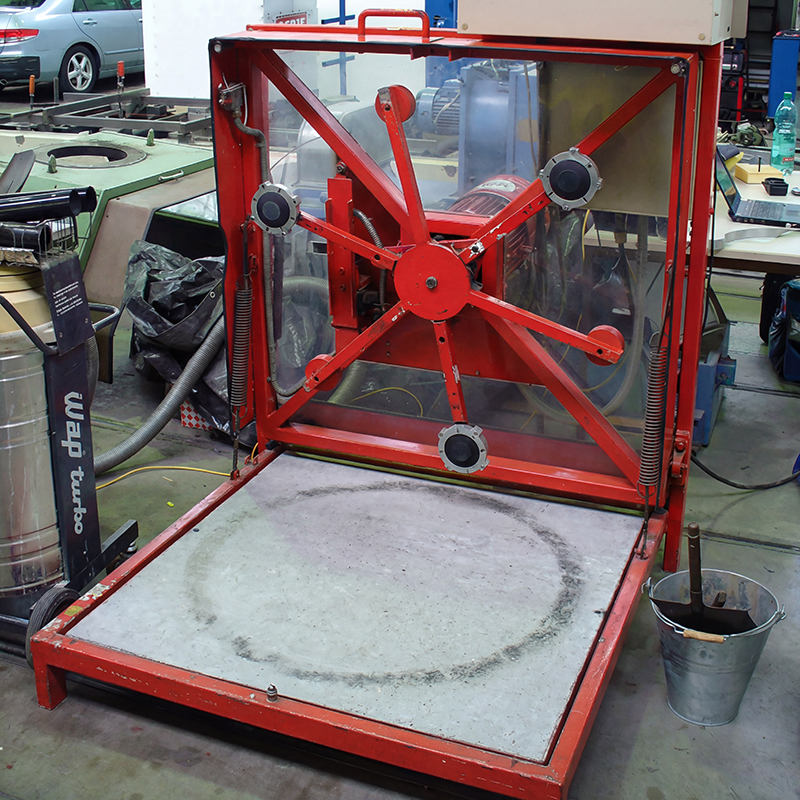
Now under the EN17092 directive there are three levels of abrasion resistance; the lowest being Single-A; the highest being Triple-A.
In common with consumers in many markets, motorcyclists are often swayed by rankings, stars and alphanumeric ratings. And so many have concluded that, or have been persuaded that, AAA garments, by definition almost, are more protective than Double-A or Single-A ones.
In reality, that is often far from being the case.
And that's partly because abrasion resistance is all about protecting your skin as you slide down the road. But actually, in the way of things, a garment's abrasion resistance is not such a big deal. Losing skin can be painful, of course, but the reality is that in a road accident, as opposed to what might happen on track, there doesn't tend to be a lot of sliding.
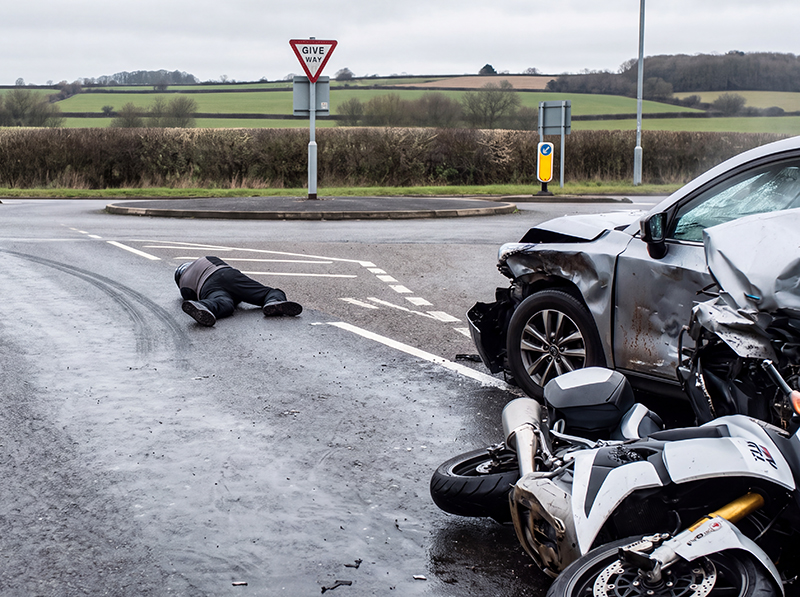
Most serious accidents, and more than half of motorcycle fatalities, occur when a motorcycle comes into contact with a single vehicle. And when this happens the abrasion resistance of a garment's outer fabric counts for almost nothing. By far the majority of serious accidents occur at a junction where, again, sliding is rarely a factor. Whilst Alpinestars' own research indicates that the average motorcycle accident is done and dusted in just two seconds; and that doesn’t leave a lot of time, once again, to do much sliding!
The other reality here is that the nature of our roads in the UK means that even if you don't collide with something, when you come off the bike it is unlikely that you will slide very far. When we come off the bike, we are actually more likely to roll or tumble; our smooth progress disturbed by painted road markings, cats eyes, manhole covers, potholes, loose chippings, road repairs and the like.
Of course, if there's no other vehicle involved, what tends to happen when we have an accident on the road is that our progress will still be brought to an abrupt halt by coming into contact with something hard and immovable. Something like a kerb or some other piece of road furniture. A wall. A tree. And so on.
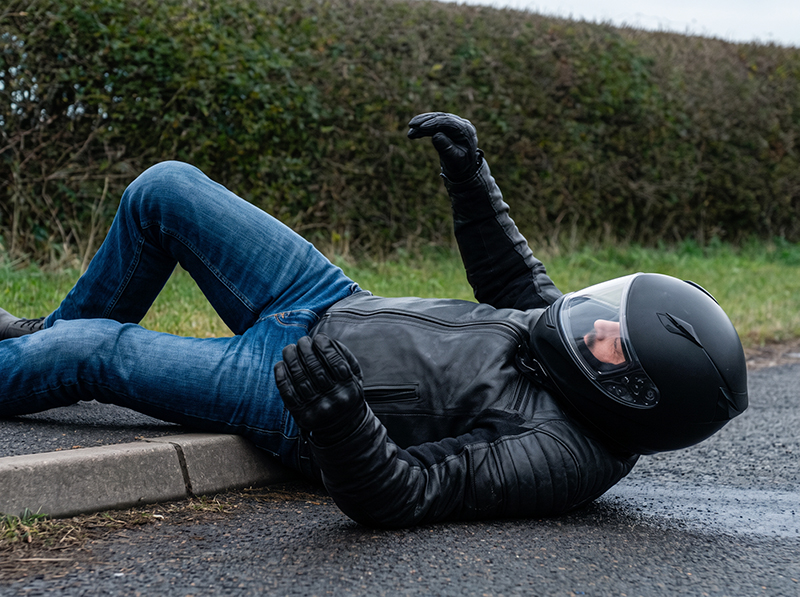
It is not, as they say, the sliding that hurts. It's the stopping. That's the long and short of it.
And when we do hit something; something like the wing of a car or when we land on the the road on the other side of the bonnet, the abrasion rating of our gear is virtually meaningless. An AAA-rated jacket or pant is most unlikely to offer any more protection than an A-rated one.
In an accident like this, and indeed in pretty much any kind of serious road accident, it is more likely to be the armour that is going to give you the best chance of walking away intact.
Motorcycle armour
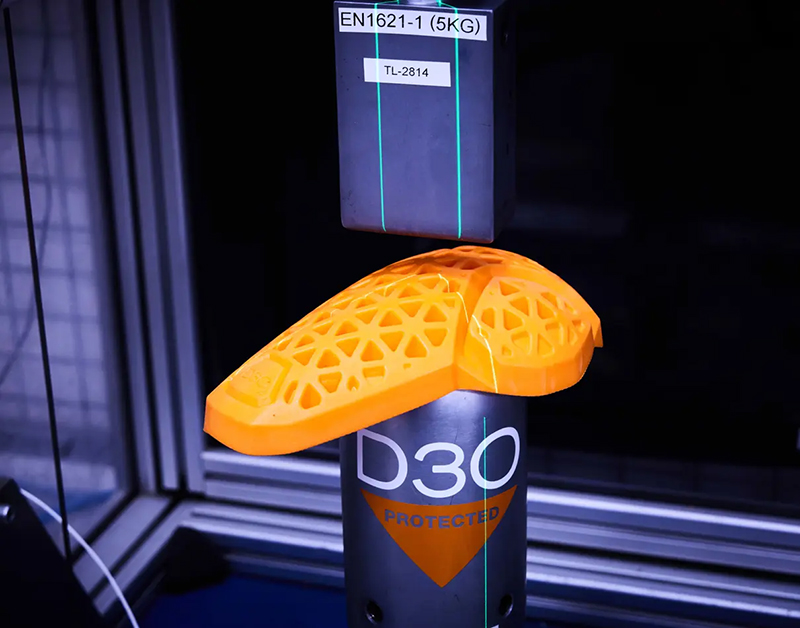
The role of armour is very simple. It is there to absorb the energy of an impact, to ensure that less force is transferred to the body.
By reducing the force of an impact, it is your armour that can prevent bone fractures and breaks. It is the armour that can protect your spine. It is the armour that can reduce the possibility of the kind of internal injuries that can result from a heavy coming together.
Obviously, one should always wear armour. The issue is that not all armour is born equal.
Now when it comes to motorcycle armour there are two key components.
The first is the level to which the armour performs; that is to say the amount of energy it absorbs.
Motorcycle armour falls under the auspices of a directive known as EN 1621. EN 1621-1 deals with the limb protectors that cover the elbows, shoulders, knees and hips. EN 1621-2 deals with back protectors.
(There is another standard, EN 1621-3, for chest protectors, but that test is a little more complicated so we won't go into it here).
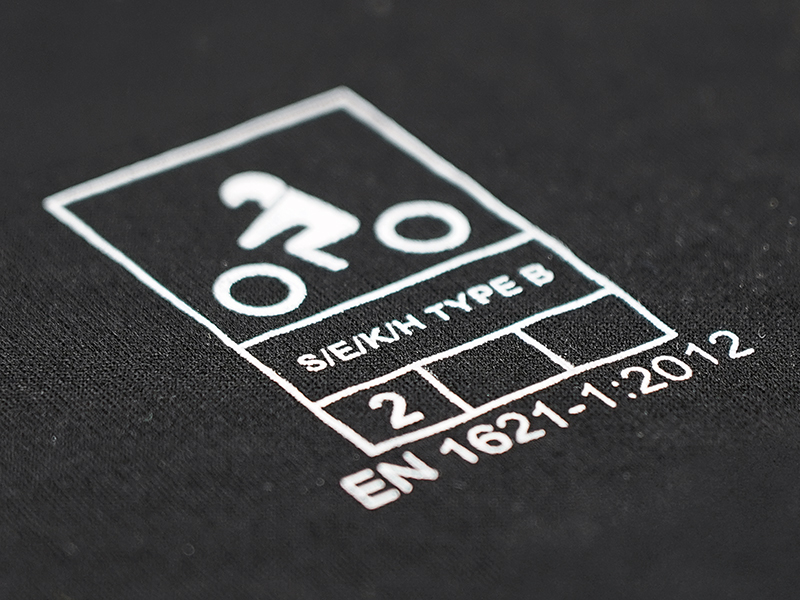
Anyway, with all CE-approved armour there is a Level 1 and a Level 2 standard.
The standard is dictated by the amount of force that is transferred in response to a 50 Joule impact. For Level 1 limb protectors the average peak force that is allowed to be transmitted is 35 Kilonewtons. For Level 2, the pass mark is just 20 Kilonewtons.
For back protectors, the maximum peak force that can be transmitted is 18 Kilonewtons at Level 1 and 9 Kilonewtons at Level 2.
And so what we can see clearly is that Level 2 armour is going to provide you with far more protection in an impact than does Level 1.
The second key key factor with armour is its size.
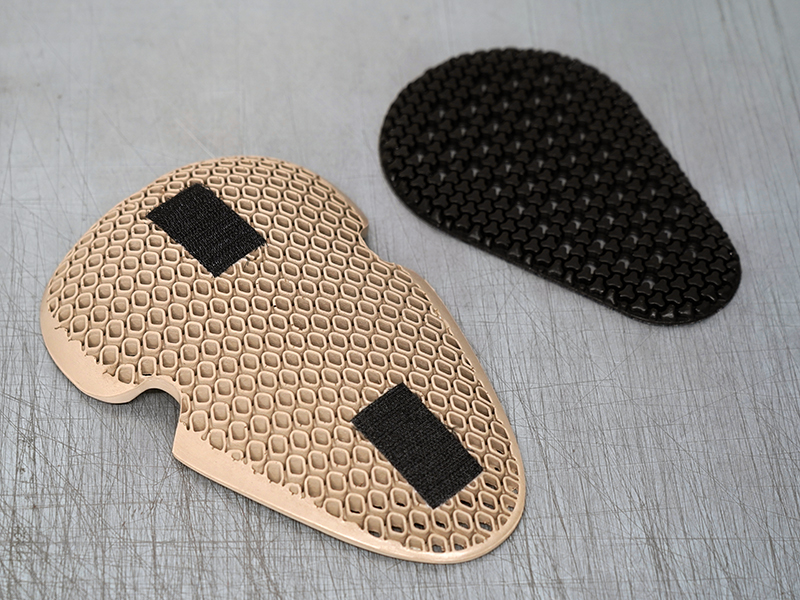
That is to say the surface area, or the amount of your body, that the armour covers. And this is important because the larger the armour the greater are the chances that when you collide with something that armour will be able to come between you and the object in question.
This is particularly important because, even in its more protective Level 2 configuration, some limb protectors and some back protectors are very small; tiny even.
It's something that most of the manufacturers like to gloss over. In order to tick a box, they will often proudly proclaim that the armour in their jackets or pants is Level 2, but they will usually fail to acknowledge that it just isn't very big.
So, in conclusion, what can be seen is that, important as it is to staying protected on the bike, not all motorcycle armour is born equal.
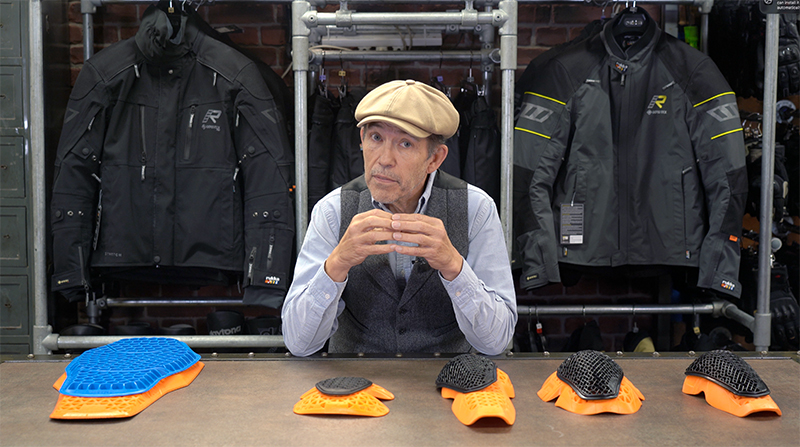
Chris sat at table with Level 2 motorcycle armour
The point we have long made about Rukka's Level 2 armour is that it is simply huge.
Now for the purposes of our comparison we've chosen to compare Rukka’s armour to Dainese’s. We’ve not done this for any particular reason. Dainese is a reputable brand, and has always positioned itself as a manufacturer that cares about protection and rider safety.
But despite this, a Rukka elbow protector is about 32% larger than the elbow protector in a Dainese jacket; the shoulder protector is 80% larger, the knee armour is some 85% larger. Amazingly, the Rukka hip armour is more than twice the size of Dainese's hip armour.
And it is partly the knowledge that Rukka's armour is larger than anybody else's that has always tended us to the view that, whatever a Rukka garment's EN 17092 abrasion rating you would, in just about any road accident situation, be better protected in a Rukka outfit than you would be in one from just about any other brand.
For us, though, there was always another reason for believing that Rukka's gear was more protective.
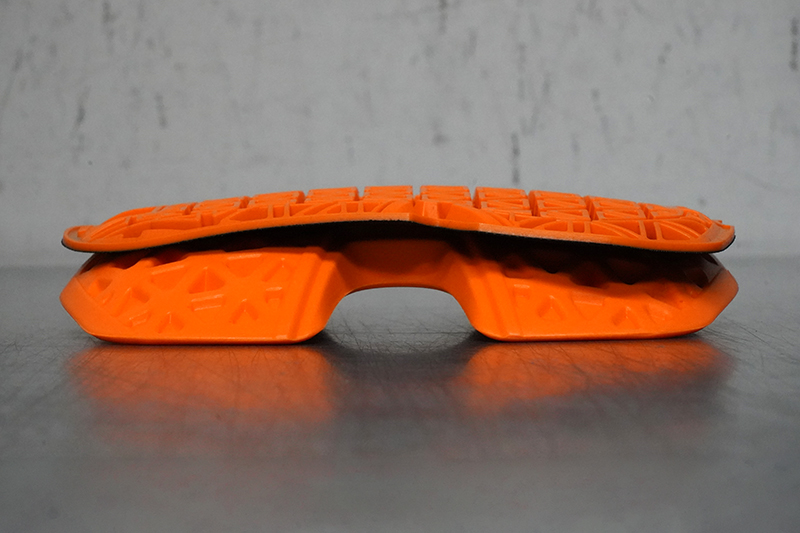
And it was that it always seemed self evident to us that Rukka's armour would far exceed the minimum Level 2 pass mark. There is simply no way, for example, that D3O's super-light, super-thin and super-flexible Level 2 Ghost armour, whilst brilliant in its own way, would perform to anywhere near the same standard as the near inch-thick protectors to be found in a Rukka suit.
For quite a while we chased Rukka for the figures to back up this assertion. We knew such figures were available; we were convinced that our supposition had to be true, but we wanted official confirmation.
Perhaps there was a language problem; something that got lost in translation, meaning that they didn't quite understand what we were asking for. Conceivably, they just didn't feel comfortable about supplying such confidential background material to a retailer. But despite our repeated requests we did not receive the information that we requested.
Well that was until quite recently. At last, we have those numbers. And they are interesting.
Now what we know is that most off-the-shelf armour from people like D3O, SAS-Tec and Rheon is designed to hit the pass mark, but no more than this. And that's because this is the most cost-effective way for a manufacturer to market armour; to keep the price as low as possible whilst still hitting the required level.
But that’s not the Rukka way. Rukka has always been more concerned about protection than it is about hitting price points.
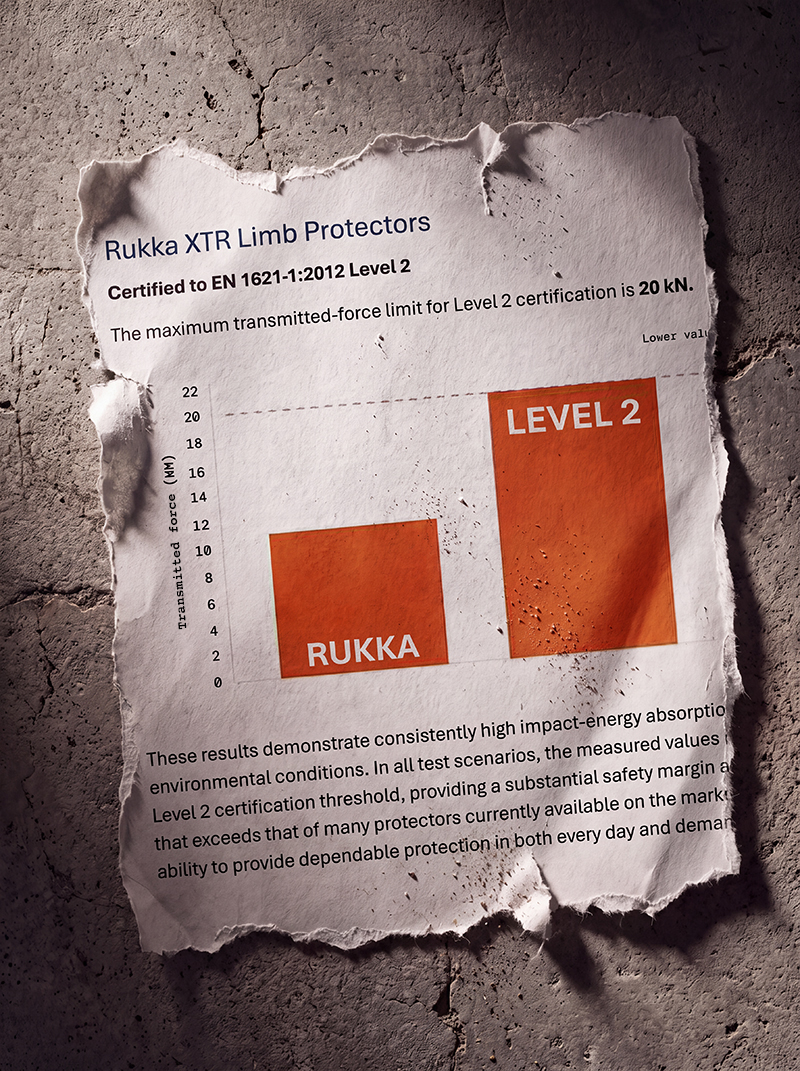
Now you may, or may not, recall that the pass mark for Level 2 limb protectors, in terms of the force that could be transmitted, is 20 Kilonewtons. Well Rukka's limb protectors transmit just 11 Kilonewtons in what is known as the 'Ambient' test. And what that means is that the Rukka limb protector that you would find in the elbows, shoulders, hips or knees of a Rukka suit is a whole 82% more energy absorbing than most brands' Level 2 armour. Put another way; it’s not far short of twice as protective.
That's pretty huge in our book.
When it comes to the back protector the Level 2 pass mark under EN 1621-2 is 9 Kilonewtons. The Rukka back protectors transmits just 6.5 Kilonewtons, making it 42% more protective than a protector that passes the Level 2 standard at the threshold level.
That's not quite so huge, perhaps; but it's still pretty darned impressive.
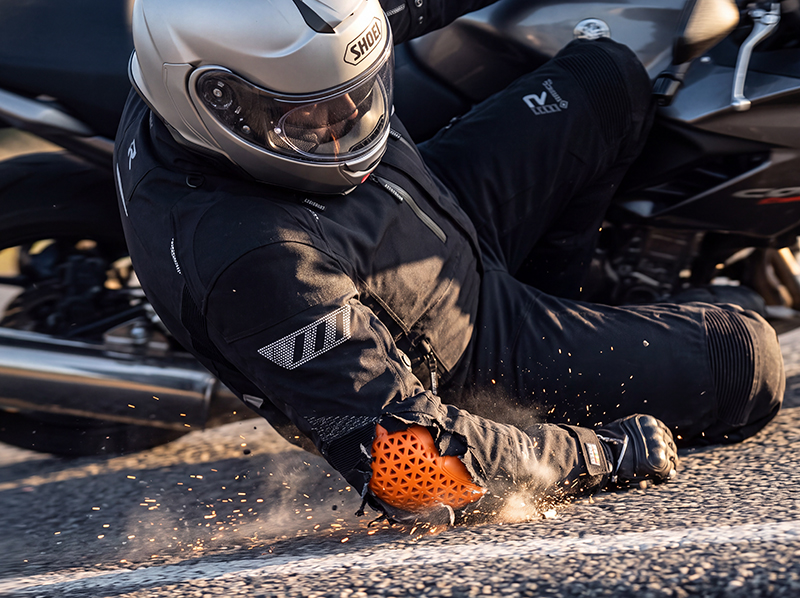
But there's another thing.........
As most people these days acknowledge, EN 17092 is a pretty simple test of a fabric's tear and abrasion resistance. What it's not in any way is a safety standard; and that's because it pays almost no heed to armour.
But what should not be ignored is the fact that the armour in a jacket and pant will also significantly add to a garment's abrasion resistance. And it will do so in three out of the four EN 17092-designated high-risk Zone 1 areas. That is to say the shoulders, the elbows and the knees. As well, obviously, as in the hips and on the back.
Now in the aftermath of a motorcycle accident you may occasionally see tears in the outer fabric of a biker’s jacket or pant. But what one never sees is armour that has been worn through from abrasion. So what might be suggested is that with protectors as large, as thick and as strong as Rukka's, the armour is also going to make a significant impact on any Rukka suit's level of abrasion resistance.
Armour’s contribution to abrasion resistance is a factor that is not always given great consideration, yet it seems to us that it is an undeniable truth.
So where do we get to?
There is much nonsense talked about EN 17092. It is simply not what it purports to be; not what many people would have you believe it is.
Nobody likes the idea of losing some skin, but in any kind of serious road accident it's the armour that will serve to give you the best chance of walking away, rather than being taken away. And if that's the case, then it has to be acknowledged that Rukka's over-sized armour that exceeds the Level 2 standard by up to 82% has to give you an even better one.
Especially when you take into consideration the contribution that such armour will also make to any Rukka garment's level of abrasion resistance.
Combine Rukka’s armour with one of their AA-rated outfits, and you've got a textile suit that is more protective than anything out there.
But, in our view, even an A-rated suit like the Rukka Nivala is going to give you higher levels of real-world protection than you'll find in just about anybody else's AA-rated outfit. And probably more than you'll get in most AAA-rated ones.
The armour, you see, is a life saver!
A suit's outer fabric? Well, not so much, I'm afraid!
You can buy Rukka motorcycle protective wear with free next day UK delivery online, or visit our store in Guildford to try something on.


