Motorcycle Gear Guides & Reviews
We were one of the very first retailers in the UK to offer an airbag vest. We came across Helite at the Paris motorcycle show at a time when they were still trying to convince the world that their experience in the equestrian market could be transferred to motorcycling. But we didn't work with them for long. We found their vests to be simply too heavy and cumbersome. But I suspect that we also weren't all that enamoured by the look and what, back then, an airbag said about a rider.
Here at Motolegends we talk a lot about 'high-airflow' jackets. And that's because, when it comes to biking, we are fans of layering. And, for the avoidance of doubt, in the context we're talking about here, layering is not about wearing a base layer, although wearing an effective one will undoubtedly help layering to work better. Nor is layering about throwing a fleece on under your textile jacket. That's what we call ‘throwing a fleece on under your textile jacket’.
Here at Motolegends we sell a fair amount of high-end, laminated clothing. Whilst we are more than aware of the benefits of laminated membranes, many of our customers will know that we are of the view that drop-liner gear, where the membrane is fixed but hangs independently, is a better option for most motorcyclists. Drop-liner jackets and pants tend to offer better value. They are more comfortable. And because of the extra air gap between the membrane and the outer chassis they tend to be warmer in cold weather. Crucially, drop-liner garments will not let you down on the waterproofing front in the way that most laminated ones will.
If you’re going to be riding in Europe in the coming months you should be aware that there’s a darned good chance that it could be bloody hot. The kind of temperatures we just don’t see over here. Now riding a motorbike when you’re really hot is unpleasant. It's uncomfortable, it can get very sticky and, in extremis, it can be dangerous. So we need to understand what is going on when we get too hot on the bike. And importantly we need to know what to do about it.
Like all motorcycle gear, over the years helmets have become more complex. They are more technical and sophisticated than they ever used to be. But I don't think the manufacturers have been very good at communicating just how far helmets have moved on over the years. Maybe that's their fault. Maybe it's the fault of retailers who prefer making quick and easy sales. Or maybe it's the fault of motorcyclists who seem more interested in colourways than in protection. The reality is that all parties are probably a little to blame.
At a time when most apparel sellers find it easier to go with the flow and sell their customers laminated, motorcycle suits, we take a slightly different view. We reckon that for 90% of motorcyclists, traditional drop-liner clothing is a better proposition. Laminated suits tend not to 'wet out', by which we mean become water logged. But for a garment to reach this state a rider has to be out in heavy rain for four hours or more; and the reality is that most motorcyclists only very rarely find themselves in this position.
As most people know, a few years ago a new helmet safety standard was introduced. It was, and is, known as ECE 22-06, and it replaced a standard that had been around since the mid-seventies. That standard was ECE 22-05. Helmet manufacturers are no longer allowed to produce helmets to the old, lower standard. Or rather they are are not allowed to sell such helmets in the EU. When the new standard came in, Shoei was quick to update all its current models to the new, higher level. With the exception of the Hornet.
In recent years there's been a lot of talk about noise cancelling in motorcycle helmets. And it seems like something that we should all want to take advantage of, but noise cancelling in a motorcycle helmet is not like the noise cancelling you get in a set of Bose headphones. Frankly, we think a lot of people are going to be quite disappointed by the difference noise cancelling in a motorcycle helmet makes. The difference it makes is not nothing; but then again it's not huge. And what always needs to be borne in mind is that noise cancelling will make nowhere near the difference that a set of even the very cheapest earplugs will make.
After much head scratching I think I may have worked it out; I have, I feel, come to understand why Bennetts' reviews often seem so contrary. Okay, so I understand that, in life, there are no absolutes; there are no rights and no wrongs; just shades of opinion. But I admit that I have often found it hard to comprehend why Bennetts seems so determined to challenge received wisdoms.
Let us be up front about this. The Belstaff Tamar is a pretty direct copy of the Klim Marrakesh jacket. It really is as simple as that. And like that jacket it’s going to flow air through every single panel. In hot weather it's going to be very cool to ride in but, exactly as with the Marrakesh, you’re going to need layers when it’s chillier.
Shell materials, EPS liners, Pinlock ratings, helmet fit, fogging, safety standards and more, everything you actually need to know about motorcycle helmets, explained without the marketing spin.
The Air Vihti has been on the market for a little while. In fact, we first started selling it in July 2025; and we’re now in May of 2026, but we only recently realised that we had never done a full review about it, so we thought it was about time we got around to it. Especially as we have developed a bit of a soft spot for the Vihti. At the very beginning we weren’t massively taken by it, but having got to know it a bit better we have come to realise that, for some people, it’s a better option than our favourite jacket of all time: the venerable Klim Marrakesh.
Now even though we are far and away the largest seller of Klim in the UK, their range is so huge that we have to admit to not knowing it as well as we would like to, which is why we had not originally selected the Carlsbad suit for this season. Instead, we elected to offer Klim’s signature Badlands Pro A3 adventure suit and their upgraded Kodiak road suit.
We often bang on about what we consider to be a 'proper' adventure suit. It might be that we are indulging in semantics a little, but for us any outfit with a laminated membrane, or indeed any suit with a membrane of any description, cannot be considered an adventure one because if you're adventuring anywhere exotically hot, or if you're working up a sweat off road in such a place, the last thing you want anywhere near your body is a waterproof membrane because you'll sweat your nuts off. A situation that can rapidly lead to heat exhaustion.
The first question, I suppose, is what is an adventure suit, and why do we think this is a proper one? And the answer is not totally straightforward, because different manufacturers have their own take on the subject. Klim, after all, owns the 'adventure' market. It's the highest profile name in the adventure world, and certainly if a retailer wants to be seen as a serious purveyor of adventure gear they won't be taken seriously if Klim is not in their portfolio of brands.
There was an Explore-R suit before this one. The reason that there's this new one is that Gore, as part of its desire to be at the head of the environmental agenda, has introduced a raft of new fabrics with membranes that do not incorporate harmful, forever chemicals. When a fabric is changed, a motorcycle, clothing manufacturer has to re-test a garment for abrasion and tear-resistance under EN 17092.
Where do we start? Well, first thing, Gore-Tex is just a brand name. It's sometimes shortened to GTX when used as part of a product's description. The brand is owned by W L Gore & Associates. They're an enormous, $5bn, American producer of technical fabrics and materials for a huge array of applications; from medicine to the military. And for everybody from sailors to soldiers, and from mountaineers to motorcyclists.
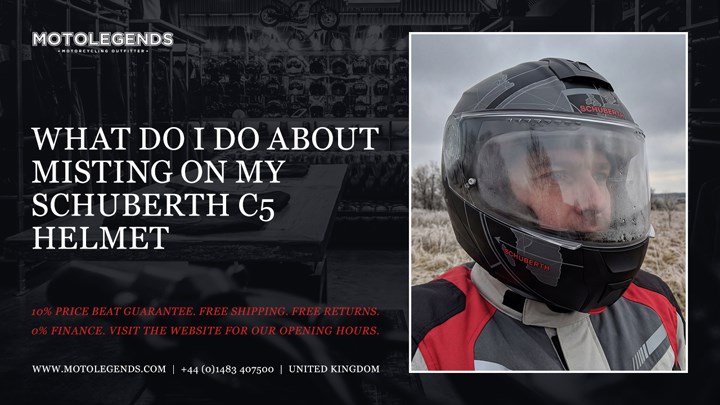
This is not an uncommon occurrence on the Schuberth C5. There’s a good reason for it. There’s nothing wrong with the helmet. You just need to understand why it’s happening, and accept that it’s the price you pay for a helmet that, in theory, is quieter than other helmets. To understand what’s going on, let’s take a step back. tion of condensation.
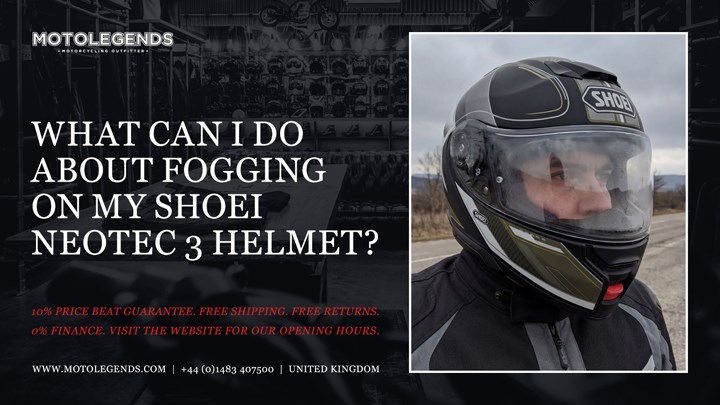
This is not an uncommon occurrence on the Shoei Neotec 3. There’s a good reason for it. There’s nothing wrong with the helmet. You just need to understand why it’s happening, and accept that it’s the price you pay for a helmet that, in theory, is quieter than other helmets. To understand what’s going on, let’s take a step back. Fogging or misting in a helmet is simply a manifestation of condensation.
When Scott first told us that they were going to discontinue their Ergo Pro waterproof jackets and pants, we were a bit distraught. These were, after all, the best waterproofs the motorcycle world had ever seen. They were, of course, exceedingly waterproof. But it was the stretchy, yet robust, nature of their outer fabric, in our view, that made them so popular.