Motorcycle Gear Guides & Reviews
We love single-layer motorcycle jeans. In fact, so enamoured are we of this form of construction that we haven’t offered traditional kevlar jeans for quite a few years. Our dislike of lined jeans, whatever they are lined with, has little to do with how protective they are. And that’s because some lined jeans are very protective. Some, of course, especially those that are only partially lined, are not particularly protective. But that’s not our point; our antipathy towards lined jeans come down to one key factor. Namely, that they are lined.
This is another one of those email bulletins that will only be of interest to some people. Certainly, I would imagine that most Motolegends customers will already know the difference between these two types of construction. But not everybody is so enlightened, so we are putting this video out to explain the difference to those who might still be a little confused. So here goes.
For the last four or five years we have worked with Trickers on a motorcycling boot. There’s been a bit of a break during the pandemic, but excitingly our new collaboration, the Roadster boot, has just arrived with us.
It was the early part of lockdown 2021. I think it was a Sunday. We were working away in the Airstream. Sara was supposed to be doing something important on the website, but was in reality researching potential holiday opportunities. I was writing an email bulletin. Suddenly Sara popped her head above a screen: “We should get ourselves a couple of off-road bikes so we can do a bit more green laning. One day we might even be able to do parts of the TET”.
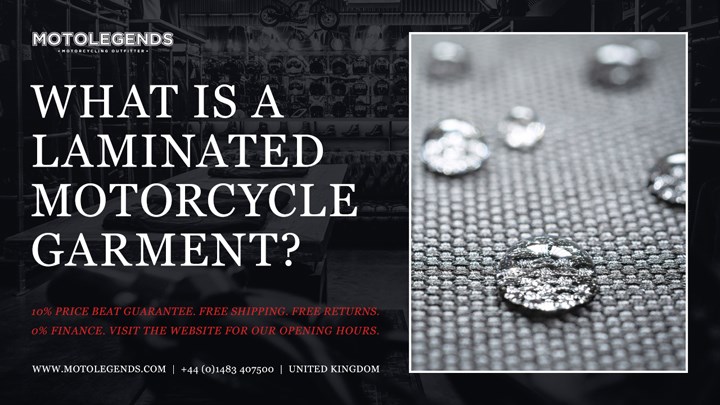
If you’re an experienced motorcyclist who takes a keen interest in the gear you ride in you may know all about laminated membranes, how they work and what they do. And if this is the case, don’t bother reading any further. Go polish the bike or go for a ride. Because what we are going to talk about now will not be of interest. But there’s still a lot of confusion out there. And there are lots of misunderstandings about what the benefits of laminated membranes are, and what the downsides are.
Spidi got into cool, riding jeans way before most other brands knew such a thing existed. They’ve been producing good-looking bike jeans for more than 20 years, using a variety of materials and fabrics. They have used an aramid fibre known as Keramide. They’ve used Dyneema and they’ve used Cordura. It wouldn’t be untrue to suggest that they were the pioneers in the creation of bike jeans that didn’t look like bike jeans.
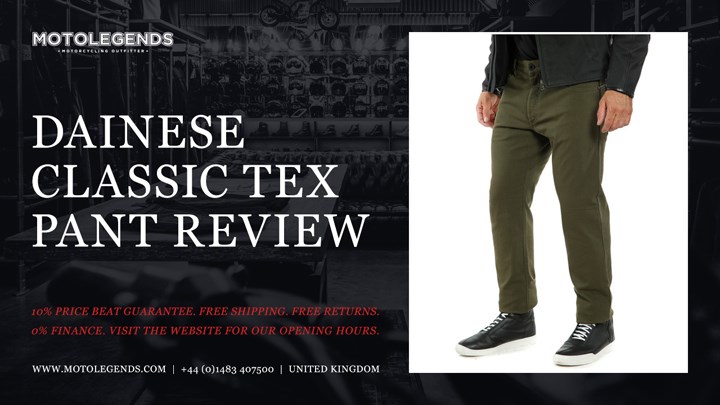
We haven’t, historically, always been huge fans of the famous Italian brand. They are notoriously arrogant and difficult to work with, and we have often been of the view that the company is more about style than substance. But for the first time in living memory Dainese now has a proper UK importer, and so we have decided to put our toe in the water and offer a few, hand-picked styles.
In recent years, lots of motorcyclists have convinced themselves that, when it comes to a waterproof, textile suit, laminated is the way to go. And it has to be acknowledged that laminated membranes do bring some advantages to some riders in some circumstances.
This might seem like a strange message for a company to put out about itself. And, of course, we think that there are just as many, and hopefully more, good reasons to visit see us, but by the same token we accept that we are not the right shop for everyone.
The original Nivala suit was first launched in 2016; and it would be no exaggeration to suggest that it changed perceptions about laminated motorcycle gear. When you laminate a waterproof membrane to fabric or material you make it stiffer. You make it stiffer still if you then back the membrane with a third layer.
This isn’t the first time we’ve spoken about Ask the Chap, so please forgive us. The only difference this time is that we have produced a video, so that you don’t have to invest any of your valuable time reading all those complicated words. So if watching a video is going to work better for you, just click on the visual above.
Some time ago we launched a new service called ‘Ask the Chap’, where we invite people to ask questions about motorcycle gear. One of the questions that has come up a lot is: what’s best, leather gear or textile gear? And so today I am going to try and provide an answer on that hotly debated topic.
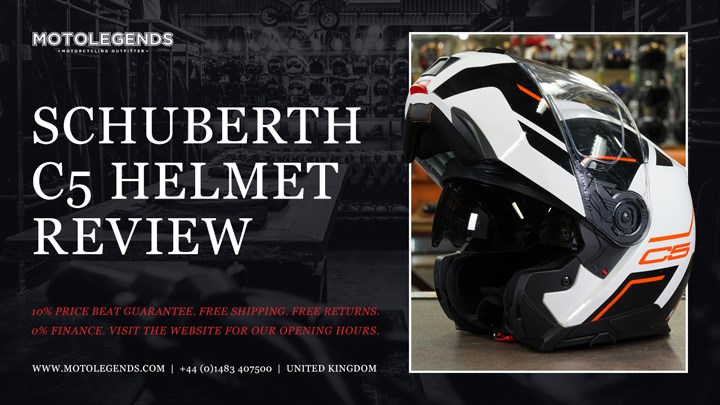
The Schuberth C5 is about to hit the shelves. Some months ago, we were supplied with a pre-production prototype to look at, but now the helmet has been released, and so we thought this might be a good time to compare the new C5 with the undisputed flip-lid, market leader: the Shoei Neotec 2.
The first point I would make is that if you ride a motorbike, there are going to be circumstances in which you are going to get wet. I often joke about the fact that if you really want to stay warm and dry, you should take the car, but there’s an inconvenient truth here. There’s no way of guaranteeing that you will always stay dry if you ride a motorbike.
Back in the day, we used to send out catalogues every month. Well, that ship has sailed; catalogues are simply too expensive and not sufficiently cost efficient. Which is a shame because we always used to enjoy putting together our Christmas issue, highlighting all the best gear that had come through during the year, and putting together buying guides for those looking for Christmas gifts.
This is another one of those oft asked questions. And I don’t know whether I can give you a totally satisfactory answer, because there simply is no scientific and objective measure as to when and whether a helmet needs to be replaced. But I have been doing this for a while. I have been to a lot of factories. And I have spoken with a lot of experts, particularly those involved with the race teams. I have picked up some knowledge along the way. And so today, it is my intention to share with you everything I know. Combine what I am going to tell you with a good dose of common sense, and you should put yourself in a better position to make a more informed decision.
A question that gets asked a lot on the internet is: “What’s the best helmet”? Or: “Who makes the best helmet”? to asking who makes the best motorbike. Ask 10 experts and you will get at least 10 different answers.
It’s a question that often gets asked on the internet. And it’s a very reasonable question to ask, especially if you are quite new to motorcycling. Frankly, there aren’t many places to go to get a sensible answer. Everybody these days has an opinion, and there are lots of people out there on the internet who are prepared to give you the benefit of their lack of knowledge. But few people really know what they’re on about. The problem is that those who do know what they are on about will normally have an agenda. That is; they will want to sell you stuff, so you can’t always take what they say at face value.
Everybody should be allowed to make one mistake. And for Schuberth that was perhaps the C4. Schuberth had historically ‘owned’ the flip-lid space, and when it came time to replace the venerable, although slightly long-in-the-tooth, C3 Pro expectations were high. It would be safe to say that the C4 failed to meet those expectations. The helmet had issues. Those issues were sorted when Schuberth re-launched the helmet as the C4 Pro. The Pro was a good helmet, albeit perhaps not the great helmet that the C3 had been.
At the beginning of the year, a new helmet safety standard came into force. This standard, known as ECE 22-06, marks a significant step up in terms of helmet protection. The new test requires helmets to be far more energy absorbent, and arguably this is the single most important quality one needs in a helmet. But there are new tests for low-speed impacts, for angled impacts and so on. In fact, there are lots of new tests. The bottom line is that 22-06 helmets are demonstrably safer than 22-05 helmets; in the not too distant future all helmets will be 22-06. But, for now, the choice is still quite limited.